2021 Eve Seymour, Mountaineering, High Atlas Expedition

Cambridge University High Atlas Expedition 2021

Expedition aims

The main focus of our expedition was to explore the High Atlas regions, set new routes and develop our personal climbing skills. This included learning and practicing basic mountaineering techniques, such as moving together, rope skills and mountain safety. In the later part of the expedition, we focused on climbing big walls (steep and over 300m per route). This was new to most of us, having mostly climbed UK based routes. This provided a great opportunity for big wall skills, such as hauling gear, making safe hanging belays and also learning to pace routes and exercise stamina. 

Between climbing, we developed personal survival and medical skills to ensure safe living whilst moving around the mountains. We aimed to wild camp as much as possible and stayed at hostels or mountain huts in between. When climbing Toubkal and Angour, we stayed at the mountain refuges. These are owned by the Club Alpin Francais, with whom we agreed to climb with whilst staying in Oukaimeden. This was very beneficial to skill development, as one member of the team was a professional mountain guide. 

Overall, the trip aimed to improve our independence and confidence whilst mountaineering, but also our ability to overcome issues whilst living in country. We developed personal resilience, problem solving and greater teamwork skills.

 Locations 

We started our trip in Marrakech for one night before moving into the mountains to a small village located high in the Atlas Range. This was called Oukaimeden and had limited infrastructure. The people living there are of Berber descent and reside in small wooden and stone huts, living a subsistence agricultural existence. Whilst here, we camped outside some villager’s homes and brought food from Marrakech to sustain us for the period that we were staying there. We used water purification tablets to access clean water. The mountains climbed here were Angour (3600m), Mount Oukiameden and a longer trek over several peaks that covered 25km. During our time here, we covered over 300km of terrain on foot. 

After our week here, we moved location to a town called Imlil. Living here was less intense in terms of daily living, with us spending the week in a lodge due to camping restrictions. Whilst here, we named and cleaned new routes for sport climbing in the local gorge and spent two days climbing Mount Toubkal at 4200m in altitude. The mountaineering here was easier than in Oukiameden but did provide is with the experience of being at a substantial altitude. 

Our final destination was located 6 hours from Marrakech in the middle Atlas Mountains. Our transport was through negotiation with local drivers and mule owners. Taghia was the small village located in this region. We stayed here for a week with a local family. Access to the village is a two hour walk on foot using mules to carry equipment. Here, we worked on big wall climbing and also went canyoning with the son of the family we were staying with. 

Climbs and Mountaineering 

A significant portion of our trip was spent mountaineering- climbing large peaks with sustained but less technical scrambles and climbs. The remainder was spent big wall climbing, which was more technical but for shorter durations. 

      Notable peaks were Toubkal and Angour- both around 4000m in altitude. Here we experienced mixed levels of altitude sickness, changes to conditions and weather, navigational challenges and a greater requirement on fitness and stamina. We covered large distances over around 12-13 hours of climbing a day. In between these large peaks, we did some local bouldering and also traditional climbing on some of the smaller cliff faces. We established new routes here which have been logged for future expeditions. 
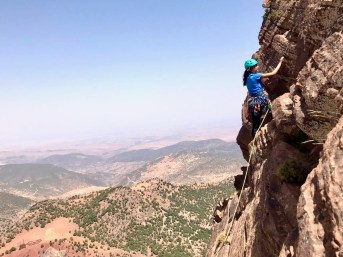
Eve Seymour climbing

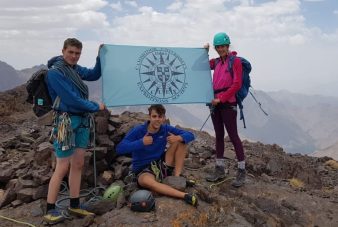
Eve Seymour summit
Angour summit . 3616m.
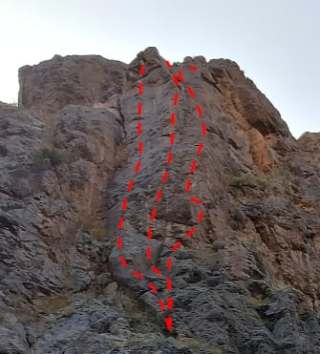
eve seymour routes
Some of the routes we documented in Imlil.

Big wall climbs were all located in the Taghia region. As a team, we attempted three long routes- 6a+ and 6b in grade. This was a great new experience for all of us, and after experiencing initial nerves, we all managed to top out on at least one route.
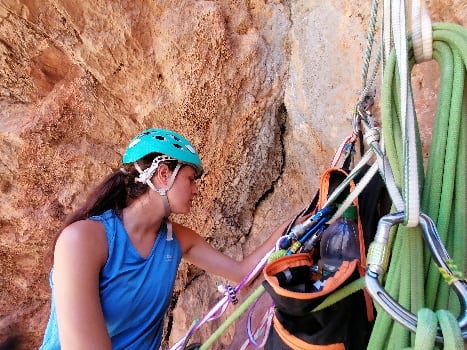
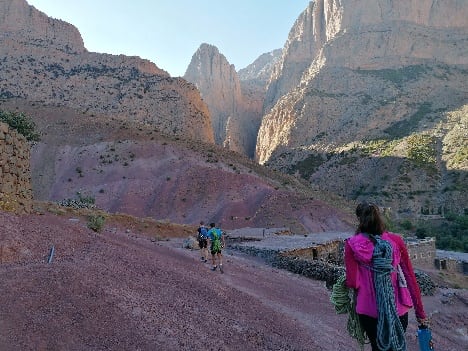
Eve Seymour ropework
100m up on Le Reve d’Aicha, 6a+.

Eve Seymour Taghia Gorge

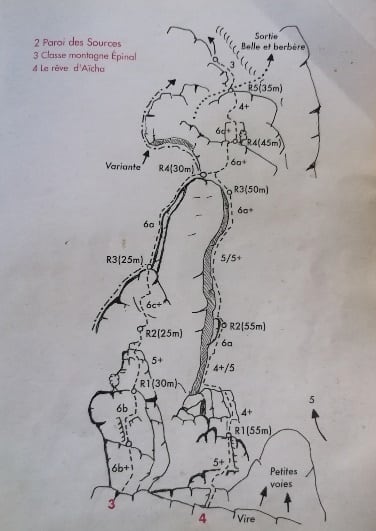
Eve Seymour guidebook
Guidebook topo for Le Reve d’Aicha, 6a+.

We feel this greatly enhanced our rope work skills and ability to remain safe, especially through the intimidating heights of big wall cliffs. We even encountered a snake part way up one route! More routes would have been attempted in this region had the team not experienced bouts of Campylobacter and issues with dog bites and rabies scares! However, this was an overall very positive experience and fantastic    for skills development. 

Incidents 

 Whilst the overall trip was successful and all aims were achieved, we did encounter some issues and incidents that required attention. Meeting a rattlesnake halfway up a route required safe assessment of risk- the options were to abseil over 200m or try to work around the route to avoid it. We concluded that due to heat and time; the safest option was to continue. 

 We also all experienced bouts of gastrointestinal illness at various times. This was mostly overcome through rest and fluids, but two members did require antibiotics, tapping into the supply that we brought with us. This was all assessed as a risk and therefore expected and accepted. 
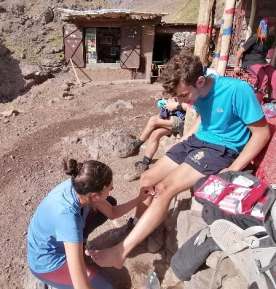
Of course the medic had the first injury!

Whilst walking into a climb, we also encountered a dog who became overly playful and bit and scratched two team members. One member had received two rabies vaccines so decided to remain in Taghia, whilst the other travelled back to Marrakech to receive PEP. Here, he was also placed on a drip as treatment for dehydration from Campylobacter and given antibiotics. He did not return to Taghia due to the time it takes to reach the mountain village. 

 Culture 

Some of the key experiences within the expedition were those gained through cultural immersion with the Berber people. The contrasting livelihoods to those in the UK showed clearly that there are different ways to live your life- and still be happy, if not happier. Modern infrastructure was limited, especially in Taghia, yet this did not seem to reduce quality of life. If anything, greater emphasis and reliance was placed on community and networks of people that enabled survival. 
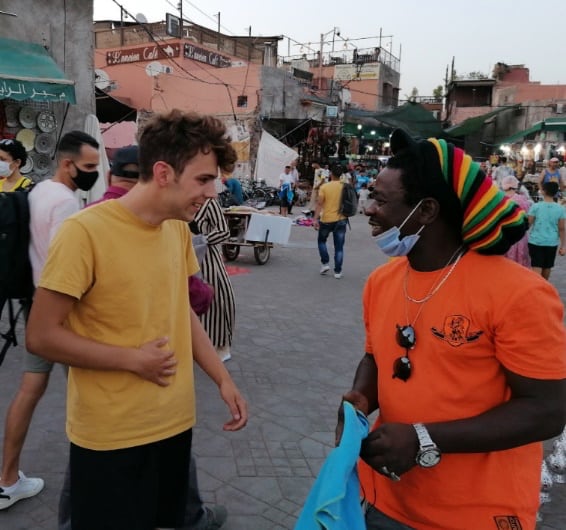
Haggling – who would win: Cambridge economist or Jemaa el Fna hawker?


Through sharing of resources, skills and time, the Berber people created systems that allowed for greater equality and ensured that individual suffering was limited. With limited technology, poor privacy within the home and low security, the mountain village appeared to forge greater friendships and had enhanced communication between people, when compared to that of UK. Friendships were also more diverse and intergenerational- it was rare to see a child alone or excluded, and this seemed to carry into adulthood. Children also seemed to be more lively, animated, and interested in their surroundings and in other people. Without research one could not be sure, but mental health appeared to be much better in these communities. 


Of course, issues did exist, and this way of life is not perfect. Disease due to poor sanitation was more prevalent and would spread more easily due to the social nature of these communities. Housing quality was also poor in some places, and we could imagine that winters would be hard and encounter some losses from health issues. Diversity within nutrition was also limited and this would impact ability to overcome health issues. However, as a whole the communities seemed to be thriving in many aspects such fitness, ability to overcome adverse situations, resilience, and an overall sense of belonging. 
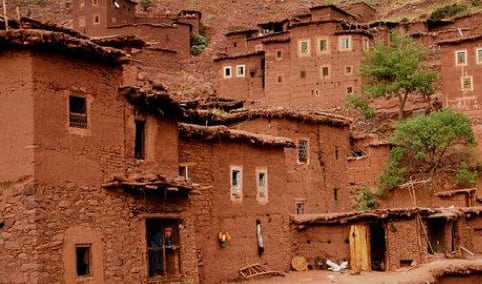
Eve Seymour berber housing

In conclusion, a major lesson learnt on the expedition was that community and increased social belonging seemed to improve the overall happiness and mental well-being of residents. Material wealth didn’t hold as much weight here when compared to these aspects of life. We believe this is a lesson that could also carry importance in our lives back in the UK. 

Acknowledgements 

Thanks must go to Cambridge University Expeditions Committee and the Expedition Society for their approval and support throughout the planning process. Also to Sidney Sussex College, Cambridge for provision of grants to Eve Seymour- entirely enabling her access to this expedition. 

Other thanks go to grants from the RDC to Joe McDermott and Gabriel Gentile, who also enabled their attendance on this expedition. Further grants were given from the British Mountaineering Council and the Jack Bloor Fund. We greatly thank you for this support. 

Finally, thank you to our families at home for the encouragement, support and uk based assistance. 
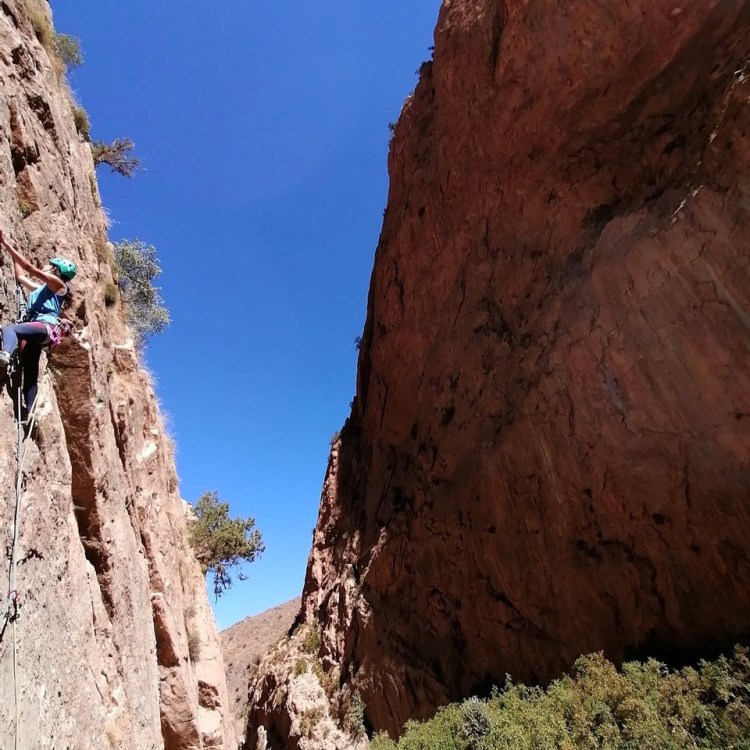
eve Seymour climbing

2021 Max Möbus, Orienteering, Junior Training Camp

Initially supposed to take place in Stockholm, the tour was a weeklong orienteering camp aimed to give MW17/18 year olds experience on quality terrain, with highly experienced coaches. The week started with the beautiful sand dune areas of Roseisle and Culbin. Both had complex contours (something I really enjoyed). The focus for these days was on direction and picturing, with some head to head races. Keeping on compass was sometimes difficult, especially with the vast amounts of cobwebs in between trees. 

Throughout the first few days, we also had the opportunity to organise an event for other age-group tours and local clubs. This was a great chance to learn how to use orienteering planning software, as well as understanding how much goes on behind the running of an event. 

Mid-week, we drove quite a way to Glen Affric. The area was used for the Orienteering World Championship in 2015, so I knew it was going to be an excellent area. The focus was on long legs and how to break them up into more manageable chunks. It was really tough underfoot, but I’d not really experienced anything like it so really enjoyed it. The start was very remote, requiring kayaks and a decent walk to get to.

As we neared the second half of the week, we began to focus more on racing, using the skills we had built up over the first few days. The middle distance race was on an area called Darnaway. The course and area were amazing (probably my favourite of the week), although I did make a fairly large mistake. In the evenings of races we did some race analysis.

Next was the sprint race in Forres. The course we ran was an adaptation of the World Championships course. This made it all the more fun, getting to compare yourself to the very best. We also got to do a night mass start race, which was the highlight of the week for me. We returned to Roseisle meaning it was very quick, and the layout of the race meant those who were behind could skip controls, keeping everyone in contention the whole time.

Aside from the racing, the social side of the camp was also great. To balance out all the running, we also had free time for the beach, river jumping and kayaking. It was nice to meet and get to know other juniors of similar ability.

So, even though the training camp had to be moved to Scotland due to COVID, the tour was still an unforgettable week, with amazing areas, races and people.

Max

SMALL TROPHIES since 1985

We are missing small trophy photos from 1987, 1988, 1990, 1991 and 2005. CAN YOU HELP?
 
The Small Trophies have been presented at the Jack Bloor Races since 1985. Pat Bloor initiated the idea of using a rock carving from Ilkley Moor for the two overall winners trophies.

Pat also initiated using a different rock carving every year to produce a small trophy which is presented to each class leader to keep, these have become a unique feature of the race.

See all trophies

[envira-gallery id=”1062″]

2021 Orienteering, Laura King, World Cup Sweden

Orienteering World Cup 2, Sweden

This year I felt incredibly lucky to be selected to run at the World Cup round 2 in Sweden. Not only was this going to be my senior debut for GB, it also gave me the opportunity to travel abroad, something I haven’t been able to do for a long time.

I had barely picked up a map in the past year and my achilleas had been playing up for the few weeks before. I was reasonably fit but I knew my navigational skills were rusty. I hadn’t put too much pressure on myself to aim for international competitions this year as I wanted to focus on my final university exams which took place in the month leading up to the selection races. It was therefore a pleasant surprise to be called up and told I’d be running both the Long and the relay at World Cup.

It was good to have something to focus on again. My aim for the next month and a half was to squeeze in some quality running sessions and get orienteering as much as possible. Luckily for my I had entered the week-long Coasts and Islands competition on the West Coast of Scotland and the Scottish 6 Days (now only 3 days). I used these two weeks to get my legs used to running in terrain again and to work on my technique. 

The World Cup Round 2 was to be held in Idre Fjäll, a ‘mountain’ resort about half -way up Sweden. After getting out on the model map twice, I quickly realised this was not your typical Scandinavian terrain. The long area was on the lower slopes of Nipfjallet. The area varied from vague and sparsely forested slope to areas of extremely intricate contour and rock detail. One area was so infamous for people getting lost it was nicknamed the ‘Bermuda Triangle’.

I will admit my nerves were quite high before the Long. This was only my 3rd W21E long ever and it was in some incredibly challenging terrain, both physically and technically. My strategy was to focus on the navigation and not the speed, as I knew time losses due to mistakes would be far more costly. Unfortunately, I had a shaky start with a poor direction to the first control. I tried to reset once I found it and made a proper plan for the next long leg. I had another small miss in the middle of the course but also executed a lot of tricky controls that involved crossing vague areas very well. 

There was a map change at the spectator run through where fatigue was starting to set in. On picking up the next map, I had to do a double take when looking at the next leg. It was a long one with 200m of climb across some very technical terrain into the Bermuda Triangle. It was definitely a test of concentration, as the further up the hill the deeper you were into oxygen debt and the more technical it got. Amazingly, I nailed the control by sticking right on line and ticking things off. There were then a few controls in the complex section, which I must have relaxed a little too much for and had another narrow miss. The rocky terrain meant it took me a while to relocate and resulted in another significant time loss. The last few legs were back down the hill across rocky ground. After my mistake I tried to reset and told myself the quickest way to the finish would be to get back cleanly.  

It was a very long day out in the forest for me, ending in 67th position out of 99 runners. Initially I was very disappointed with my technical performance but watching some of the GPS traces of the best athletes, it seemed everyone was making mistakes. Looking back, there were many tricky legs I executed really well and many lessons to learn from those I didn’t. It was a tough introduction to racing at a senior international level, but I’m happy to get another elite long distance under my belt. 

Since I wasn’t running the middle, I had two days to recover in time for the relay. I was running second leg for the second team. This was my first relay since Junior World Champs in 2019 so it was so great to feel the anticipation and excitement again. My first leg runner had a brilliant run. I was starting on my own but knew there was a group close behind. I ticked off the first two controls nicely. I lost confidence to the 3rd control having caught a Czech girl who wasn’t running on my line. A small hesitation meant I got swept up in the chasing group as we headed up onto the very intricate slope that had been the scene of many people mistakes the day before in the middle. I identified a very tricky leg coming up and made a plan as we climbed. Confident, I set off diagonally down the slope with a Norwegian runner. After a while I felt I had lost contact with the map slightly and the alarm bells started ringing. The Norwegian I was with ran on so I kept going on the chance it was round the next spur. Eventually, I decided I had gone too far and began to backtrack until I found the control. Looking back, my GPS trace passed straight through the centre of the control circle so I must have been so close to the control. Still, I should have executed my plan better. Having now lost the group, I tried my best to be clean for the rest of the course. 

There was a lot of lessons to learn from this competition and I’m excited to use the rest of the season to put them into practice and run a race I’m proud of. I’d like to thank the Jack Bloor Fund for helping me cover the cost of this competition and all the COVID tests that came with it

Laura King GB Team Laura King

2021, Orienteering, Paul Pruzina, World Orienteering Championships

World Orienteering Championships – Doksy, Czechia

Since missing out on selection in 2019, my main goal has been the 2021 World Orienteering Championships. I had been training well and was feeling fit, and covid restrictions were gradually lifting across Europe in the spring, so things were looking positive. But disaster struck when I picked up a foot injury in April. I stopped running completely, started doing a lot of strength and conditioning, and got out on my bike. 

Gradually over the next couple of months I managed to do a little more running, but mostly limited to orienteering events, and never more than one day in a row. At the end of May / start of June we had selection races, where I ignored the foot pain, and just hoped that things would get significantly better in the next month. When selections were announced I started a bit more running, but still never managed more than 30k in a week.

I flew out to Czechia five days before the races started, to get some last-minute training done on relevant maps. My foot was much happier in rough terrain than on the flat, so I was able to do a few good quality trainings in the forest.

WOC 2021 logo

The week started with the Sprint in the fortress town of Terezín. In the morning’s qualification race I made a couple of mistakes, but really wasn’t fast enough to qualify for the final, and had to watch the top runners on the tv instead. But after three months of injury without any speed work, I was mostly happy to make the start line, knowing that if the same thing had happened a month or two later, there would have been no chance of me finishing a race.

We spent the next two days in Middle-relevant terrain in the Jizerské Hori. The forests were steep and rocky, with high undergrowth and dense areas of young beech trees making the going slow and the navigation difficult. In the Middle qualification on Tuesday morning I didn’t have a brilliant race, but qualified for the final as the best-placed Irish runner. The final went better than the qualification, but I still made some mistakes and found it hard to run fast, finishing in 52nd.

My last race of the week was the Relay on Thursday in Kokořinsko. The terrain here is fantastic – massive sandstone pillars and crags on spurs separated by deep valleys, with beautifully runnable forest everywhere that isn’t too steep. If you were to try to design the ‘perfect’ orienteering terrain, this wouldn’t be far off it.

Heavy rain combined with the evening start time combined to make it very dark in the forest – a lot of runners used headtorches to see the map. One team apparently asked an official to go to a stall to buy lamps for their later runners when the race had already started! I was running second leg, and set off quite far down after my first leg runner had some difficulties.  I was on my own for the entire time, but had a good run and overtook a few teams ahead of us. 

The last race was one I didn’t run – the Long distance on Friday. This is the race I’ve really been aiming for, but with injury making it unrealistic this year, that goal will have to wait until Switzerland in 2023.

I’m incredibly grateful to the Jack Bloor Fund for helping me with this trip – it’s made a real difference, especially this year with the extra expense of Covid testing. I’d also like to mention Leeds Sports Injury and Physiotherapy Clinic, without whom I wouldn’t have made it to the start line at all.

Paul Pruzina 1 Paul Pruzina 2

2021, Road Cycling, Ben Houlihan, Junior Tour of the Basque Country

Last week I flew to Bilbao to compete in the Junior Tour of the Basque Country. A five stage road race through the hilly region of the Basque Country (Spain). The team I was riding for (Team Gaursa) was based in Durango, just East of Bilbao. Arriving two days before the race started to adjust to the climate; buzzing for the first stage to start.

Stage 1
As we rolled out of Balmaseda, you could feel the bunch was nervous. With people riding on pavements jostling for position. Within 3km of the race starting I had been brought down in a crash. After jumping back on my bike I then found my rear derailleur had been ripped off. Thankfully the team car had a spare bike for me to borrow. With the first climb starting within the next few kilometres, it was essential to get back into the peloton quickly. Using the race convoy I managed to draft back into the race, just before the climb!. It was an interesting start to my race to say the least.

After a narrow descent, on continental brakes (switched over) I found my bike was locked into the hardest gear. At this point I knew there were many hills to follow with some exceeding 15%. So I focused on trying to minimise my losses. 40 kilometres of racing later and my gears started to work, this sometimes happen with electric gears. However by this point the race had split into groups. Finding myself in the 2nd group there was very little I could do, and eventually rolled in to the finish over 2 minutes down on General classification (GC).

Stage 2
Disappointed would be an understatement but I knew that with 4 stages left, I wasn’t out of the race. Stage 2 was arguably the hardest day of the race with 3 long hills. Setting a high tempo on the climbs, I wanted to remove any weaker riders who were potentially in front of me in the GC. No breakaway formed in this stage as the pace was so high. Resulting in a bunch sprint with around 15-20 riders. Considering 190 riders had started the race and only 20 in the final sprint, it had clearly been a tough stage.

Stage 3
Stage 3 was a shorter stage about 70 kilometres, however it would be followed by a time trial in the evening. With my team mate Adam 4th in GC, the priority was to focus on holding/increasing his position. Whilst still giving me the opportunity to go for the stage. The first short laps were around a town, featuring lots of road furniture (a big hazard in races). Holding front positioning was crucial as it reduced your chances of being caught in a crash, whilst also saving energy. A break away of around 5 riders got away. Which myself and another rider later bridged to. However, one of the riders in the break away was a threat to Adam’s GC position. So I was told by the director sportif to sit on the back and play for the stage. The finish line was at the top of short climb, which had a narrow run in. Positioning was crucial for in order to win the stage. I was 4th into the last corner and which set my place for the stage. In addition to this I had gained another 1.5 minutes in the GC taking my position up to 11th.

Stage 4
Going into the final stage I was situated in 11th on GC, with my team mate Adam 8th on GC. The pace was fast from the start, with a few crashes in the first half of the race. Thankfully good positioning meant I stayed clear of any issues. Throughout the race the size of the peloton was slowly decreasing. To which in the final 20 kilometres there was a peloton size of around 30 riders. Finishing with 2 ascents of a 4 kilometres climb, we knew the final selection would be hard. I got into the front group of around 15 riders on the first ascent. With the rest of the riders being dropped. However it was the 2nd ascent up the climb which would be decisive. Leading into the base of the climb I dropped positions and a group of 4 riders attacked off the front. They would lead to gain a 40second advantage to the finish (5km) of our group of 11 riders. After a sprint from our group I would go on to finish the race in 11th place.

After a mix of emotions throughout the race it was great to have finished. Not the result I wanted however I minimised my losses and leaned a lot of lessons. I look forward to potentially racing in the Basque Country again soon. A massive thank you to team Gaursa as none of this would have been possible without them. In addition a huge thank you to the Jack Bloor fund for helping support my trip to such an important race.

2021 Jack Bloor Race MapRun Challenge WINNERS

Thanks to everyone who took part in the Jack Bloor Race MapRun Challenge.

Congratulations to all the winners, you have won a unique 2021 Small Trophy
 
Ted Mason – Wharfedale Harriers
Adam Osbourne – Calder Valley FR
Jack Cummings – Ilkley Harriers
Rachel Pilling – Pudsey and Bramley
Kate Archer – Ilkley Harriers
Lucy Mallinson – Wharfedale Harriers
David Middlemas – Valley Strider
Jeff Harris – EBORorienteers
Rachel Hagan
Daniel McKeown – Ilkley Harriers
Justin Pierce – Ilkley Harriers
Tom Paget – Otley AC
 

Your small trophy is available for collection in Ilkley, contact Race Organiser Rob King 07954 996848. Please collect small trophy for anyone in your club.

Background information about the small trophies

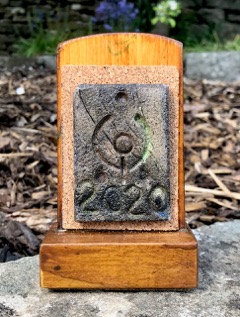
2021 small trophy

This years trophy is called the Broken Oval and Two Cups, which can be found on path west side of Backstone Beck, grid reference 1275 4624

These unique Small Trophies have been presented at the Jack Bloor Races since 1985. Pat Bloor initiated the idea of using a rock carving from Ilkley Moor for the overall winners trophies and for the small trophies, which have become a unique feature of the race.

Every year we select a different stone carving and produce a small trophy which is presented to each class leader to keep.

Thanks to James Fonquernie for making the trophies every year since 2007.

2020 Small Trophy Winners – still to be collected
Ralph Tench – Ilkley Harriers
Sue Morley
Alison Weston – Ilkley Harriers
Ben Jacques
Susan Birtwistle
Chris Birchall
Jack Wood – Ilkley Harriers

2021 – MapRun Challenge Results

Organiser’s Report – Word PDF

Overall Position Time Taken Name M/F Club Distance Pace First Three
1 41:35 Ted Mason M Wharfedale Harriers 9.17 4.32 1st Male
2 43:10 Adam Osborne M Calder Valley FR 9.44 4.34 2nd Male
43:33 Ted Mason M Wharfedale Harriers 9.27 4.42
3 45:07 Jack Cummings M Ilkley Harriers 10.32 4.22 3rd Male
4 47:55 David Middlemas M 9.20 5.12
5 48:05 Nathan Martin M Wharfedale Harriers 9.25 5.12
6 48:53 Jeff Green M Airienteers 9.23 5.18
49:17 David Middlemas M 9.24 5.20
49:28 Nathan Martin M Wharfedale Harriers 9.45 5.14
7 49:43 Andrew Overend M Ilkley Harriers 10.08 4.56
8 52:12 Graham Pilling M Pudsey & Bramley AC 9.44 5.32
9 53:23 Ed Gillham M Pudsey & Bramley AC 9.64 5.32
10 53:38 Rachel Pilling F Pudsey & Bramley AC 9.88 5.26 1st Female
11 54:16 Kate Archer F Ilkley Harriers 9.15 5.56 2nd Female
12 54:30 Dave Wilby M Ilkley Harriers 9.39 5.48
13 55:14 Arran Horne M LUOOC 10.47 5.16
14 55:18 John Hayes M Airienteers 9.16 6.02
15 55:31 Jonathan Turner M Ilkley Harriers 10.28 5.24
16 56:24 Jim Ryder M Ilkley Harriers 9.24 6.06
17 56:56 Ben Still M 9.86 5.46
18 57:12 Steve Ladhams M 9.69 5.54
57:12 Andrew Overend M Ilkley Harriers 9.70 5.54
57:13 David Middlemas M 10.48 5.28
19 59:16 Ralph Tench M Ilkley Harriers 9.49 6.15
20 60:13 Daniel McKeown M Ilkley Harriers 10.23 5.53
21 61:25 David Alcock M Airienteers 10.40 5.54
22 61:25 Justin Pierce M Ilkley Harriers 9.81 6.16
23 61:44 Tom Lynch M Otley AC 9.49 6.30
24 61:52 Tom Paget M Otley AC 8.73 7.05
25 62:24 Lucy Mallinson F Wharfedale Harriers 9.33 6.41 3rd Female
26 62:50 Colin Williams M Ilkley Harriers 9.82 6.24
63:01 Justin Pierce M Ilkley Harriers 12.11 5.12
27 63:35 Henry Varney M 10.53 6.02
28 63:48 Jonathan Coney M 9.59 6.39
29 63:54 Mark Judkowski M Ilkley Harriers 9.53 6.42
30 65:02 Ben Jacques M 10.13 6.25
65:20 Tom Paget M Otley AC 9.33 7.00
31 65:22 Simon Quin M Otley AC 9.39 6.58
65:49 David Middlemas M 9.43 6.59
32 66:30 Peter Haines M ? ?
66:59 Steve Ladhams M 9.92 6.45
67:22 Ben Still M 10.80 6.14
68:21 Jonathan Turner M Ilkley Harriers 10.08 6.47
68:27 Jeff Green M Airienteers 9.63 7.06
33 69:00 Malcolm Patterson M 9.37 7.22
34 69:33 Claire Mcloughlin F Ilkley Harriers 10.10 6.53
35 69:35 Paddy Hagan M Ilkley Harriers 9.80 7.06
36 69:40 Sarah Haines F ? ?
37 70:30 Alison Weston F Ilkley Harriers 9.22 7.39
70:44 Henry Varney M 9.67 7.19
71:01 Lucy Mallinson F Wharfedale Harriers 9.38 7.34
38 72:21 Paul Stephens M Ilkley Harriers 9.47 7.38
75:27 Steve Ladhams M 9.70 7.47
39 77:42 Emma Taylor F PFO 9.75 7.58
40 78:32 Dawn Turner F Ilkley Harriers 9.55 8.13
41 78:55 Robert Bloor M Edinburgh RC 10.28 7.41
79:11 Tom Lynch M Otley AC 9.84 8.03
79:26 Jonathan Turner M Ilkley Harriers 9.64 8.14
42 83:09 Robert King M Ilkley Harriers 9.27 8.58
43 84:08 Louise O’Brien F Horsforth Fellandale 9.83 8.34
44 84:54 Adrian Clarke M 11.90 7.08
87:08 Ted Mason M Wharfedale Harriers 10.23 8.31
87:17 Lucy Mallinson F Wharfedale Harriers 10.03 8.42
87:28 Henry Varney M 10.37 8.26
45 88:00 Richard Rob M Airienteers
46 88:47 Jeff Harris M Eborienteers 9.80 9.04
47 95:14 Rachel Hagan F 9.98 9.33
48 95:17 Helen Jacques F 9.80 9.43
49 95:20 Catherine Glaister F 10.42 9.09
50 110:37 Josie Rothera F Valley Striders 12.45 8.53
51 110:42 Holly Button F Valley Striders 12.25 9.02
52 119:55 Ian Lovatt M 10.20 11.45
53 133:38 Lindsey King F Airienteers 9.89 13.31
133:46 Robert King M Ilkley Harriers 9.73 13.45
Glitch Hilary Bloor F Dark Peak FR 10.86 14.27
Glitch Jake Lodge M Pudsey & Bramley AC 10.45
DNF Tanya Shepherd F Fellandale

2021 Rock Climbing, Dan Bottomley and Harry Lewis, Outdoor First Aid Course

First Aid in a time of Covid

It’s currently quite difficult to imagine why in December, the start of another period of nationwide interminable boredom, we choose to book a climbing trip to Malawi for June under the assumption that It would go ahead. But we did and we’re still hoping that the border situation might change in time for us to go.

We’re both experienced climbers living in Sheffield. Our plan is to go and establish a new route in the Mulanje Massif in Malawi, home to some of Africa’s biggest walls. The main attraction is the Chambe wall, 1800m of granite slabs, some of which we are hoping will be devoid of enough grass tufts to produce good, honest, hard climbing. Between us we’ve got experience climbing all across the UK, Europe and further afield on sea cliffs, mountain crags and everything in between. This trip however, will be the first time either of us have attempted anything that could come close to being described as an expedition.

With that came a desire to remove some of the mist around first aid. Between us we’ve come across a few accidents at the crags, ground falls, head injuries, broken bones excetra. Sometimes the casualty was us, other times climbing partners. Throughout we’ve always muddled through, and got to the point where we can cart someone off to A&E. Unfortunately, that’s not going to be an option this time around. Getting a casualty to the ground on this trip will be a multi hour affair with numerous abseils, followed by a long walk out to arrive at a small town with a basic field hospital. Pragmatically we decided that knowing a few tricks for stabilising a casualty might be a useful set off skills to hold.

At the start of March we both attended a two day accredited outdoor first aid course. We were looking to get some ideas on how to stabilise any broken bones, deal with massive blood loss and head trauma. In short the likely injuries from a climber fall or rock fall, ones that need to be dealt with urgently. Over the two days we spent time dealing with various scenarios. Whilst our newfound ability to roll a placid casualty into the recovery position may not come in much use whilst in suspension on a big wall, we were given plenty of opportunity to practice splinting broken bones and dress major wounds using a very limited amount of equipment. The classroom sessions also covered diagnosis of shock and dealing with environmental conditions. Our instructor was patient enough to allow us to attempt to derail his delivery and offered plenty of advice that was well outside the scope of the course.

Our original intent was to complete a three-day first aid course, that is still the plan, but that final day is hard to come by at the moment. Hopefully when the restrictions ease, we will be able to book our final day and if we can’t before we leave?  We will still be heading out to Africa with a much stronger knowledge of what to do when the sky falls on our head.

Our thanks to the Jack Bloor Race Fund for providing us both with financial support to cover some of the cost of the course.