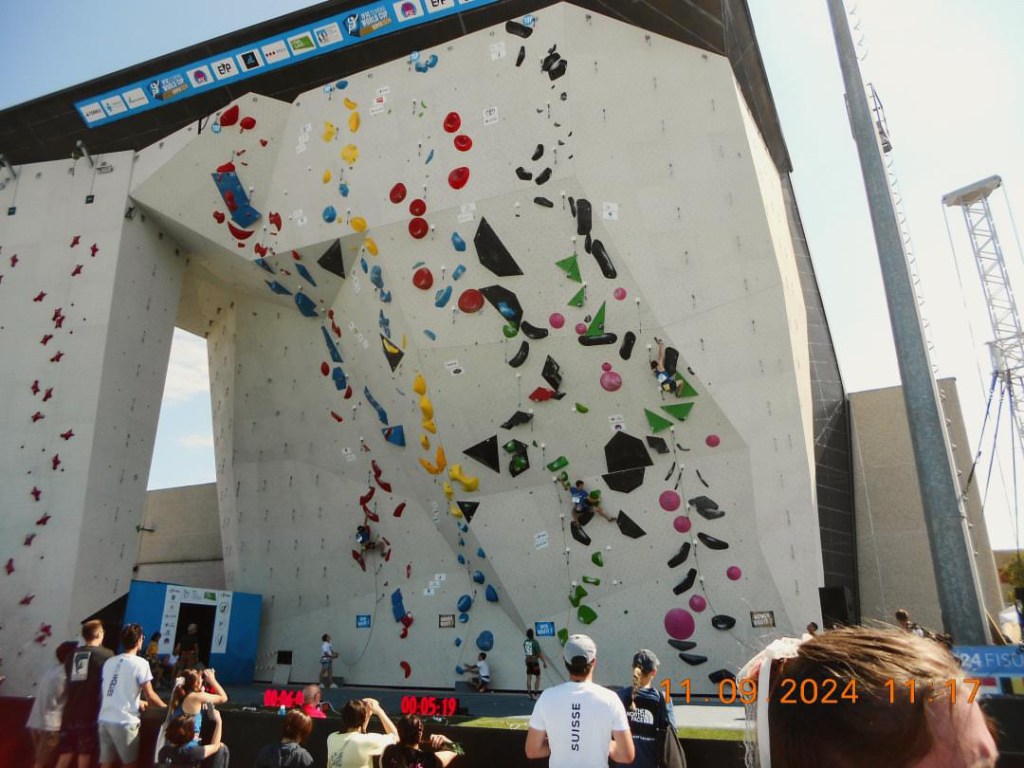
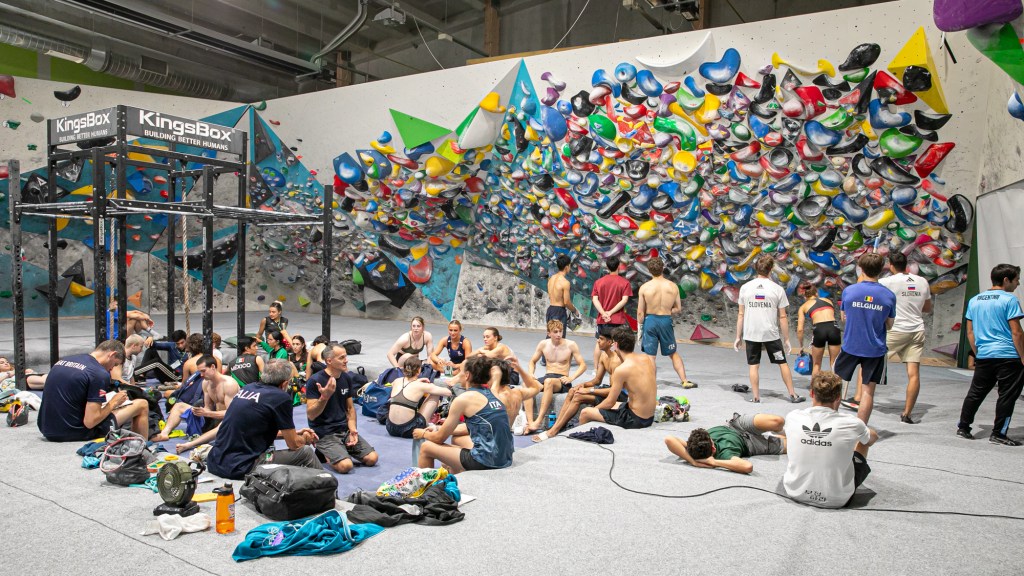
In September I had the great pleasure of competing at the FISU University Climbing World Champions in Koper, Slovenia; a competition I had been selected for after coming second at the BUCS climbing championships in February. As a youth climber I had previously spent a large amount of my time between the ages of 10-18 training in order to be able to compete on the world stage, representing team GB. Whilst I have been partially successful with this, having competed at European competitions in 2018, I have been unable to compete internationally, after being dropped from the GB team for one year only to get re-selected for the team and then have my competitions cancelled due to COVID. Following from this I have been unsuccessful in getting selected from the Senior GB team and was unsure if I would get the chance to compete at a world championships. Getting selected for the FISU World Championships was very exciting for me after many years of working towards this goal. Whilst exciting this competition did come with a hefty price tag of £1500, and I am therefore very grateful for the financial support provided by the Jack Bloor Fund to help me deal with this cost.
Having been selected for the competition, I then began a rigorous training cycle with the aim of making semi-finals and potentially finals at this competition. Although I fell short of this goal, I was still relatively pleased with how I climbed during the competition and can report that I placed 32nd out of 58 people in the lead event and 41st out of 67 in the boulder. Whilst not quite achieving the high standards I had set for myself I am so pleased to have had the opportunity to compete at a World Championships representing Great Britain and competing against many other amazing and talented climbers from all over the world. An additional joy of this competition was the opportunity it presented to meet and talk to other climbers from all over the world, some of whom I have had the pleasure of climbing with since the competition. Thank you so much to the Jack Bloor Fund for supporting me and helping to provide me with this once in a lifetime opportunity.
Near to the end of this summer I attended a 10 day training camp hosted by JROS in Czechia. 22 Orienteers from the M/W16 category (born in 2008) had been selected from all across the UK and I was lucky enough to be one of the last selected for the camp.
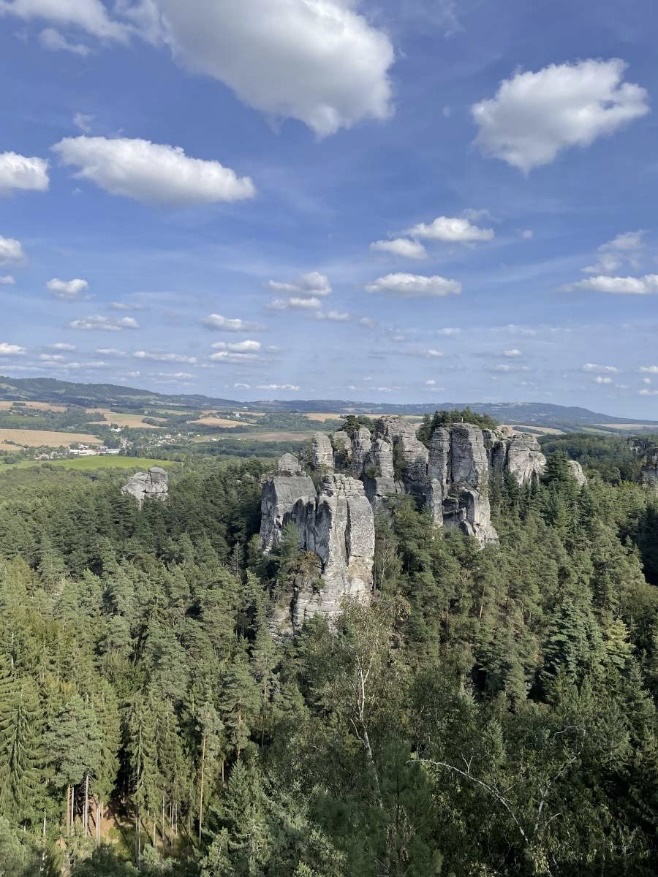
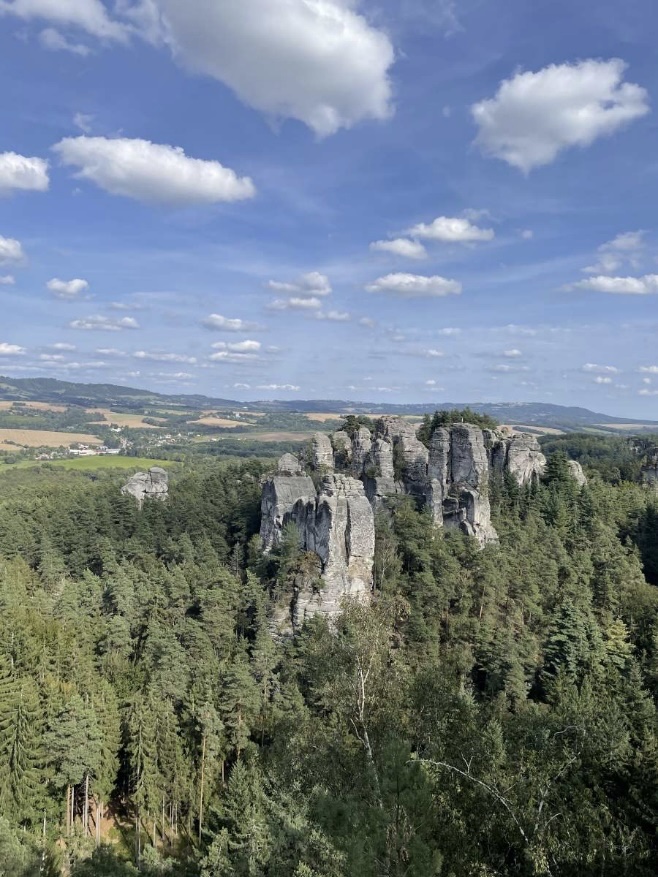
The trip started with a very late night due to an hour delay with flights and then straight into the terrain in the morning. Our training was split between the 2 types of forest which are most commonly found in Czech. Sandstone forests which were very runnable and included valleys with high sandstone pillars and cliffs. And a less rocky more gradual terrain which had complex boulder fields.
The first few days of training involved morning sessions on the boulder field terrain and then a more relaxed activity in the afternoon. This training style allowed me to enjoy the terrain while also doing good training without a risk of getting too tired. After a few days we swapped over to the sandstone terrain which was a lot more physical as the courses contained a lot more climbing. This area was more interesting though, as the big sandstone features created more route choice.
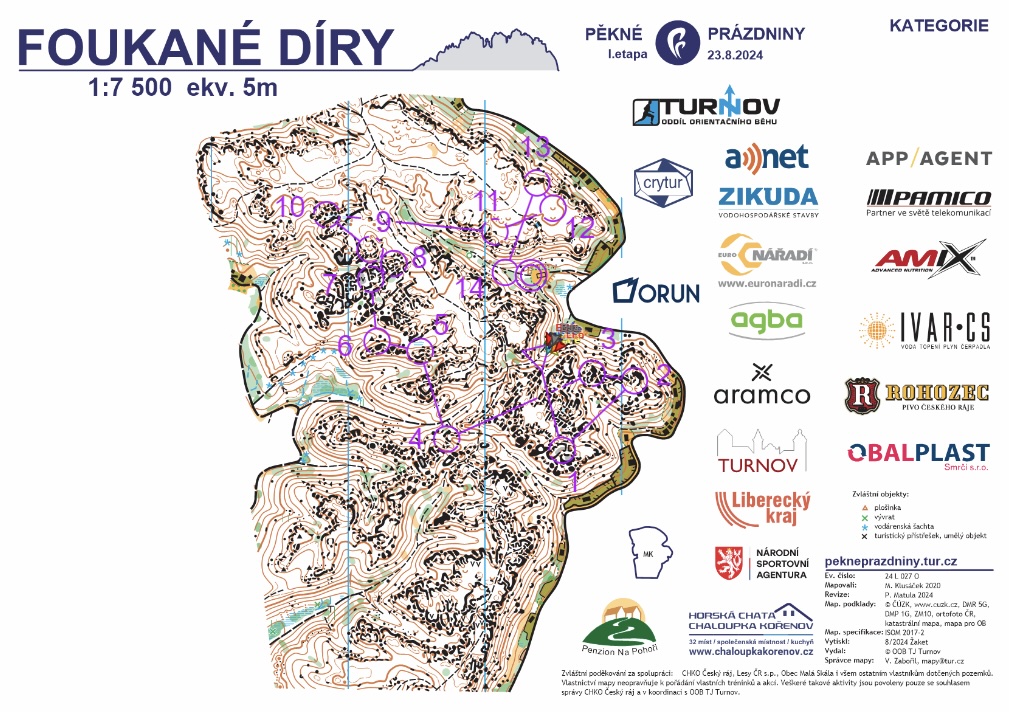
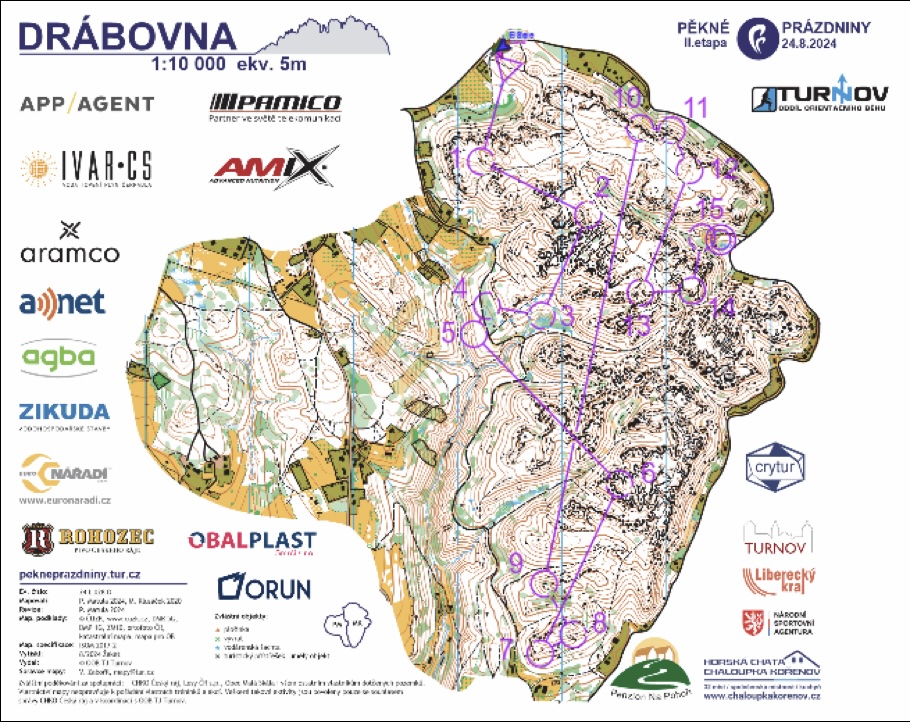
After a rest day spent swimming and relaxing we did a morning training activity which consisted of a 2by2 relay and then set off to the first day of a 3 day event called The Pekne Prazdniny. The first day was a middle distance course in Sandstone terrain(probably the best area of the week) and consisted of many complex legs in and out of a “rock city” area with many different passages. I made a few mistakes inside the harder areas but overall had a decent race for my first ever event on non British terrain.
After the middle distance we headed back to the house had a debreif on the event and relaxed.
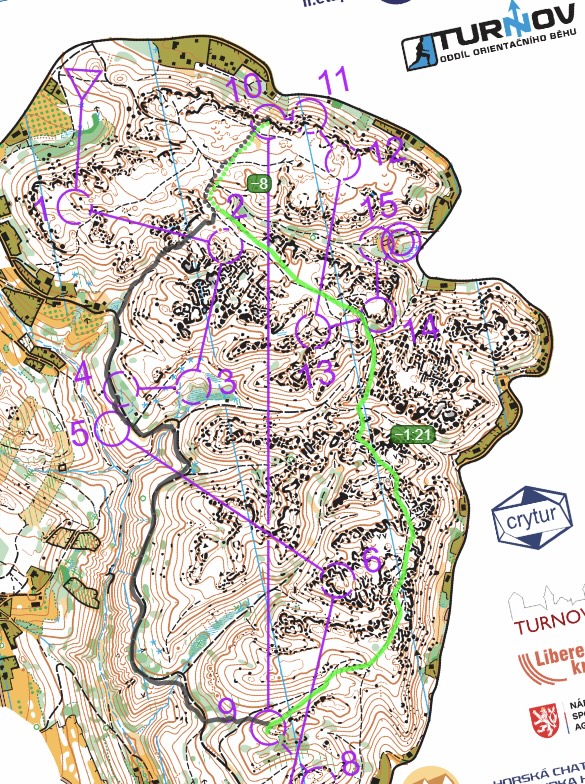
The next day(day 2 of the event) was a long distance on the same terrain as the first day, with an extra area added. The longer legs(such as 9-10) provided a new challenge of route choice aswell as navigation through the difficult rocky terrain. For this leg in particular there was 2 main choices: To run on the path west of the line(grey) or run on the paths East. I took the first option which was thought to be slower after the debreif. I felt my navigation was good in this event though with only a few small mistakes. Then on the final day we had another middle distance in a more “British” terrain over the other side of the hill. This area was less interesting but still provided good orienteering training.
After this we packed up and got in the cars for the long drive to Prague where we walked around the city exploring some of its attractions. After this we headed back to our accommodation on public transport and headed to bed.
The next day we woke up early and made the final journey to the airport before everyone went their separate ways. In all the camp was a great experience. I learnt a lot and saw some amazing places, balancing difficult training with relaxing and enjoying the country of Czechia with an amazing group of people.
Finally I would like to thank both my orienteering club: Aire and The Jack Bloor Fund for providing funds to help me go on this camp and providing me with this amazing opportunity.
Links to the Livelox of the event can be found here: day 1, day 2, day 3.
The Orienteering Junior European Cup took place in Vienna at the end of September and offered me an amazing experience of racing against the best competition in beautiful forests, whilst exploring Venice and it’s culture.
There were three races a sprint distance on the Friday, middle on the Saturday and a relay on the Sunday. The terrain varied greatly with a steep ridge for the middle and a sloping visible forest for the relay which made for the ideal fast and tight race. My best race was in the sprint with fast paced navigation and quick decisions and with only a few wrong route choices I came 22nd with only 5 seconds splitting 5 places showing the level of competition at this event. These 5 days were amazing in terms of the opportunity to compete against the best nations and runners in an amazing environment!
Thanks to the Jack Bloor Fund for helping me fund this trip.
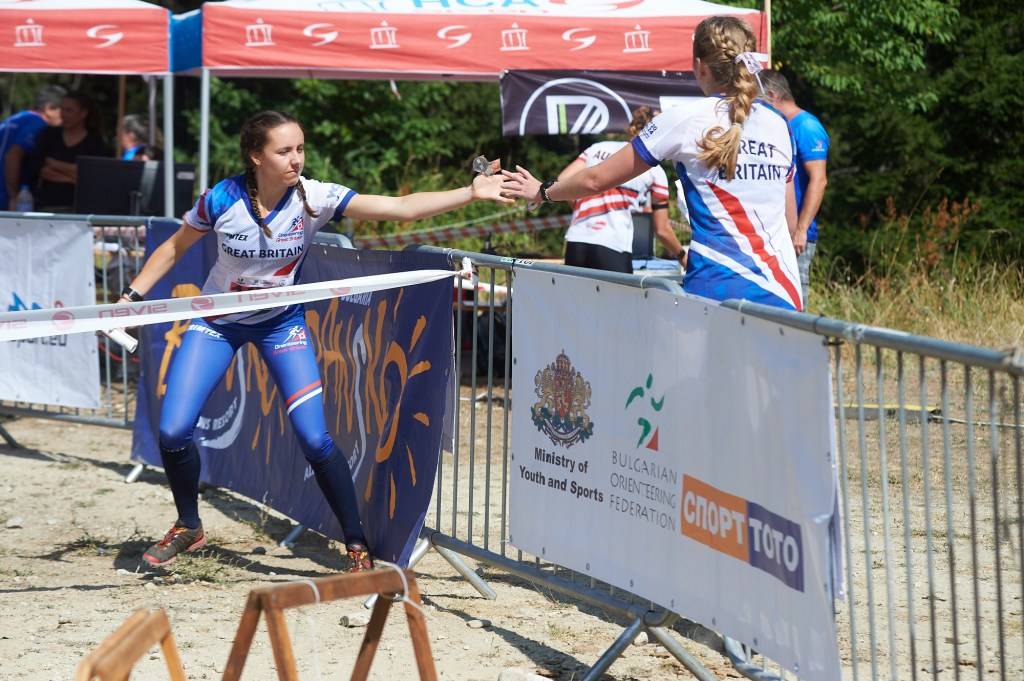
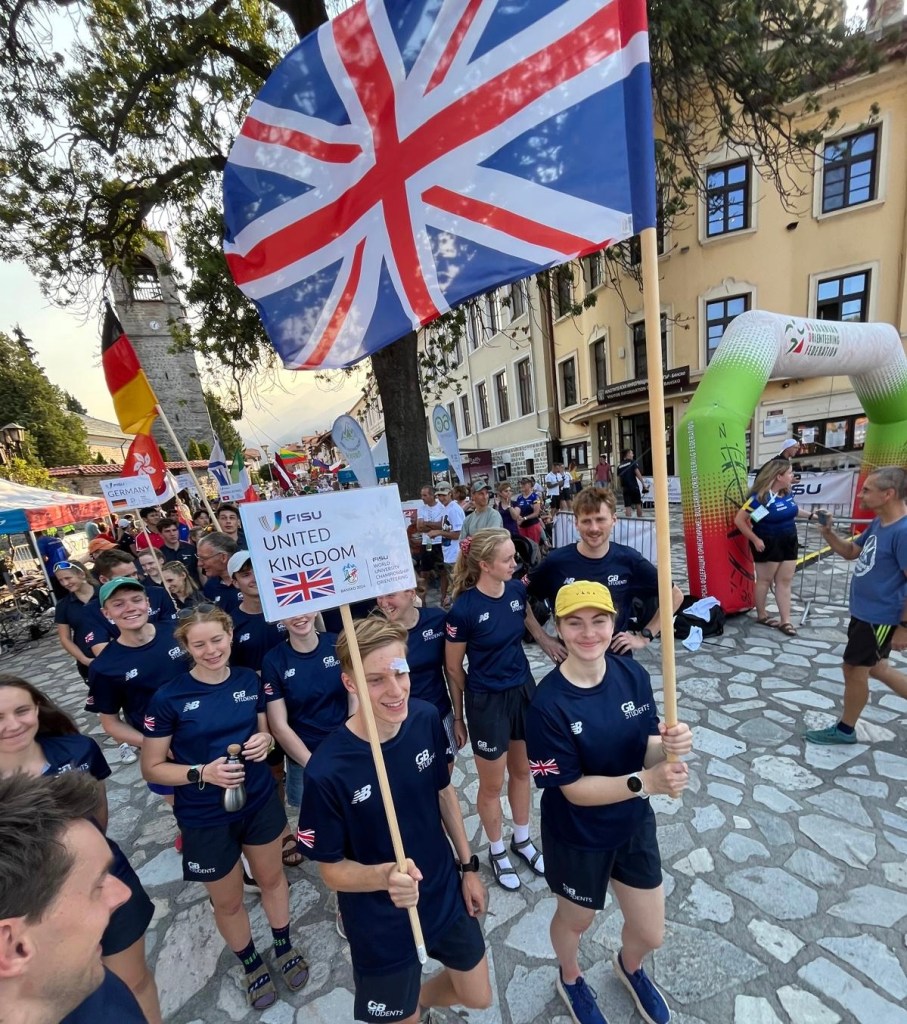
The World University Orienteering Championships was held in Bulgaria this year. As my last year eligible, I had been aiming to compete at this competition since the last time it was held in Switzerland two years ago. I had successfully been selected for the team in Spring but shortly after picked up a stress response in my shin which wiped me out for most of the season and many of my other competition aims of the year. My goal was to be back training and ready to compete in Bulgaria. After a few setbacks, I wasn’t close to where I’d hoped to be physically but I was confident I could complete all the races and give it my best.
I arrived in Bulgaria a few days early to compete in a local race, do some training and acclimatise to the 30+ degree weather. The competition centre was located in Bansko, a very picturesque ski town at the foot of the mountains in Pirin National Park.
The first race was the individual sprint around Bansko. The town had a reasonably simple layout so the sprint was going to be fast and furious, not particularly suited to my strengths but I felt confident in my technical ability. After a cautious start I found a nice flow and committed to a simple route on the long leg. I had not seen a small cut through a fence so it wasn’t the shortest but I executed it well. The simpler navigation also gave me time to plan ahead. I had to work hard to maintain some speed through the final part of the course as I really started to feel my lack of speed work. I was pleasantly surprised to finish 17th out of a field of over 100. It was bitter sweet knowing that had my training gone to plan this season it would have been very possible to get a top 10 or better. But it was nice to know I had maintained some form through all my cross training.
The race I had been most looking forward to was the middle distance. Again, feeling a little out of practice moving through terrain, the aim was to have a navigationally clean run. The first few controls were the most difficult of the entire course, on very complex rocky slop. I tried to start conservatively but still lost a couple of minutes due to scrappy navigation in this part. The rest of the course was executed fine, but a bad route choice on a decisive leg meant a few more minutes were lost. My end result was 28th, not exactly what I’d hoped for but there were parts of the course I could be happy with and I’d started to feel like I was racing again.
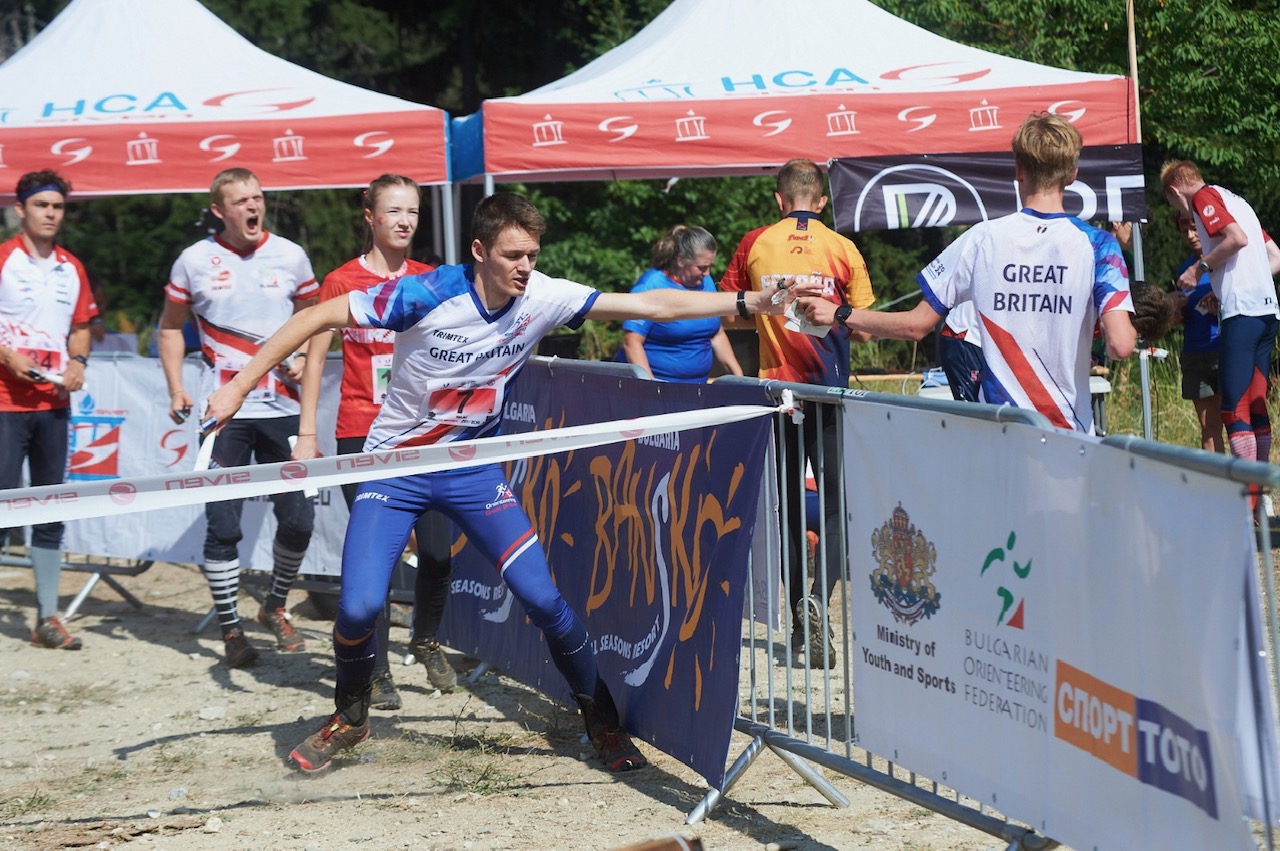
The final day was the relay, I was in the first team running second leg. I had learnt a lot about the terrain in the middle distance and felt ready to race head to head. Unfortunately our first leg runner had a tough time and set me out a long way behind the lead. This meant my job was to have a stable performance and catch as many teams as possible. I felt very in control and overtook a large group half way round. I pushed hard towards the end and closed the time gap to the next runners. After a great performance on last leg we finished the race in 8th. If our first leg had come back with the second British team, our overall time would have put us in the fight for the medals, so there were plenty of positives to take away.
Overall the week was a great experience. It was a good chance to catch up with international friends in similar age groups and explore a new country which really pleasantly surprised me. I will definitely be coming back to Bansko, for running, orienteering or maybe even skiing. My results weren’t what I had hoped for at the start of the season, but I’m happy that I managed my injury well enough to get back racing in time and that all the cross training gave me some base fitness to work with.
As my last year eligible for the Jack Bloor Fund, I want to thank all the trustees and volunteers involved in making the race and fund happen. For many outdoor adventure sports without much funding, this financial support really helps young athletes chase their goals. This year I will finish the season in Finland for the final World Cup race, before focussing on making the World Orienteering Championships team for the first-time next year after what will hopefully be an injury free winter of training out in Sweden where I am now living and pursuing a PhD. The continued support from the fund, year after year has undoubtedly helped me gain competition experience and develop as a junior orienteer to an elite senior competing on the international stage.
Thanks to the Jack Bloor Fund and money l earned as a climbing coach and route setter I was able to fund this trip.
Earlier this month I was selected to represent GB students at the FISU sport climbing university world championships in Koper, Slovenia, after qualifying 2nd in the British University Championships in Boulder. After a couple of years with no international competitions it was lovely to compete in GB kit again!
As I’m a full time student at Sheffield University and I have a part time job, it’s usually pretty challenging to try and fit much training in. But this summer I decided to fully focus on climbing for a few months in the run up to this event.
Throughout the whole competition we had to battle adverse weather as it was either extremely stormy or incredibly warm and humid which definitely wasn’t ideal for climbing. I didn’t manage to qualify for the semi final but all in all it was such a fun event and I’m really pleased with the training progress I managed to make in such a short period of time. Even though my result is not exactly what I hoped for I really enjoyed climbing, all the blocs were so fun! And I’m proud that I was able to represent my University and country.
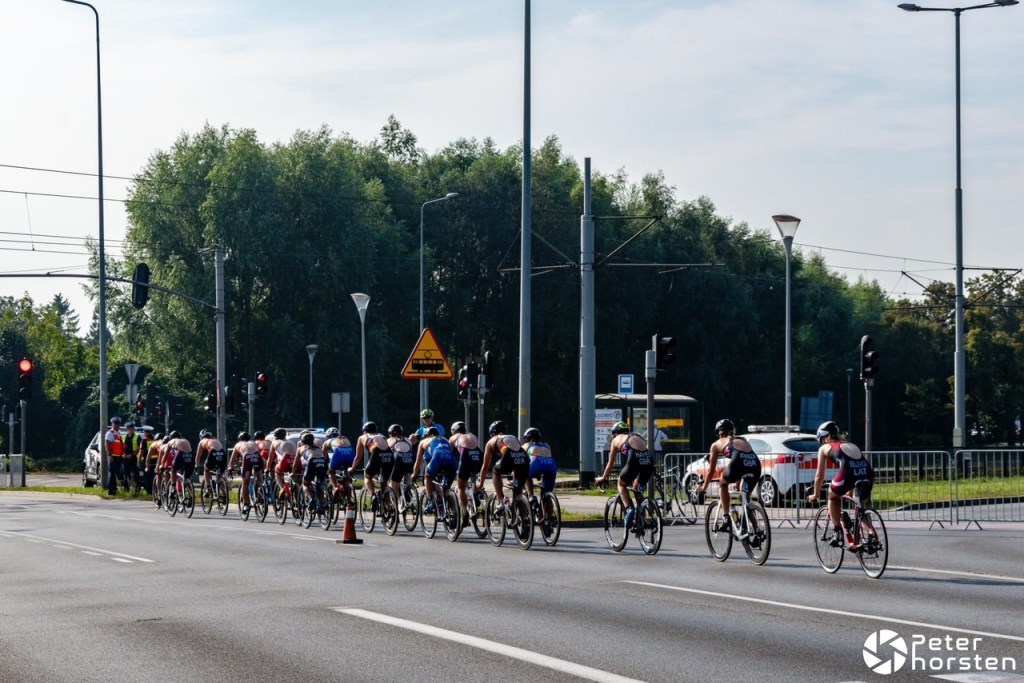
I’d like to thank the Jack Bloor Award for the support to help me be able to race in the World University Triathlon Championships in Gdańsk, Poland last weekend.
On Friday we raced the individual event, there were 75 girls racing from all over the world, it was really hot, over 30 degrees. The swim was in the sea, I had a great swim leaving the water in 4th place. The bike I started well but unfortunately by the end of the 20km bike there was a big group of 15-20 girls. The run is my weakest discipline, but I knew going into this race I was in good form, I started the run well, keeping with the front group, unfortunately just under halfway into the 5km run, I started to get a stitch. I finished in 22nd place.
I finished 2nd British female so it meant I was able to race the mixed team relay on the Saturday. I was on the second leg and had one of the fastest splits, the team ended up finishing in 4th place, just a few seconds off 3rd place.
Thanks to the Jack Bloor Fund for supporting me to be able to race in Poland, it was an incredible experience.
Lagganlia is an orienteering training camp organised for M/W14s near Aviemore in Scotland. 12 boys and 12 girls are selected each year from everywhere across the UK and it is a great way to improve your orienteering techniques and meet lots of new people.
Over the week we visited various areas which helped to improve our compass and contour skills. On day 1 we visited Heathfield (near Grantown on Spey) and got to know each other and our coaches. In the afternoon we did a clock relay in teams of 3 and my team won! The other days were the same structure as this but with different fun races in the afternoon. Halfway through the week there was a ‘rest’ day where we did 3 urban sprints, a heat, semis, and a final which I won. Later on we did night orienteering on the Spey valley golf course.
Each night we were put into our coaching groups and talked about our training. We also went over the day’s maps and discussed our mistakes and successes. The tradition on the last night is for the athletes to sneak out and hide in the grounds whilst the junior coaches hunt for them. We managed to survive and then the next day we, sleepily, got on the train home.
It was an amazing experience, I met so many new friends and improved my orienteering lots in the stunning areas.
I would like to thank all of the coaches and the Jack Bloor Fund who have made this week possible.
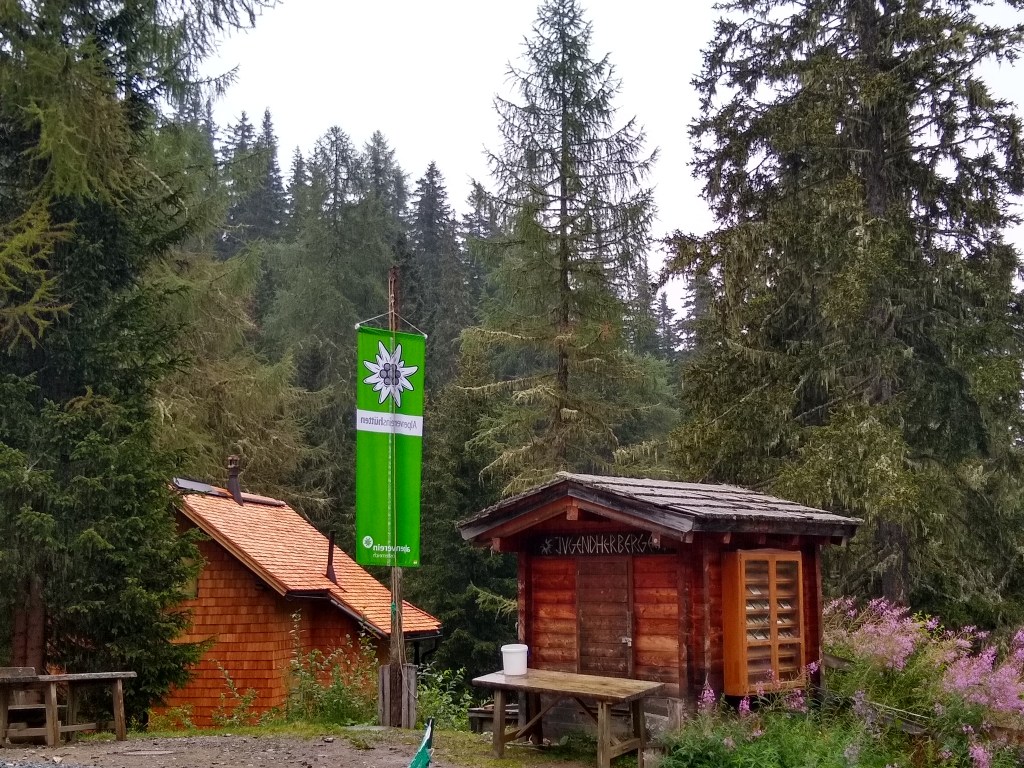
Recently, I was on an Anglo-Austrian Mountain Activity course at the Jugend-Herberge (Youth Mountain Cabin) in Fragant, Austria, run by the Österreich Alpenverein (Austrian Alpine Club). There was a complete mix – 10 girls, 11 boys, 5 Brits, 16 German-speaking.
I owe this trip to the Jack Bloor Fund, and I made memories that I will never forget.
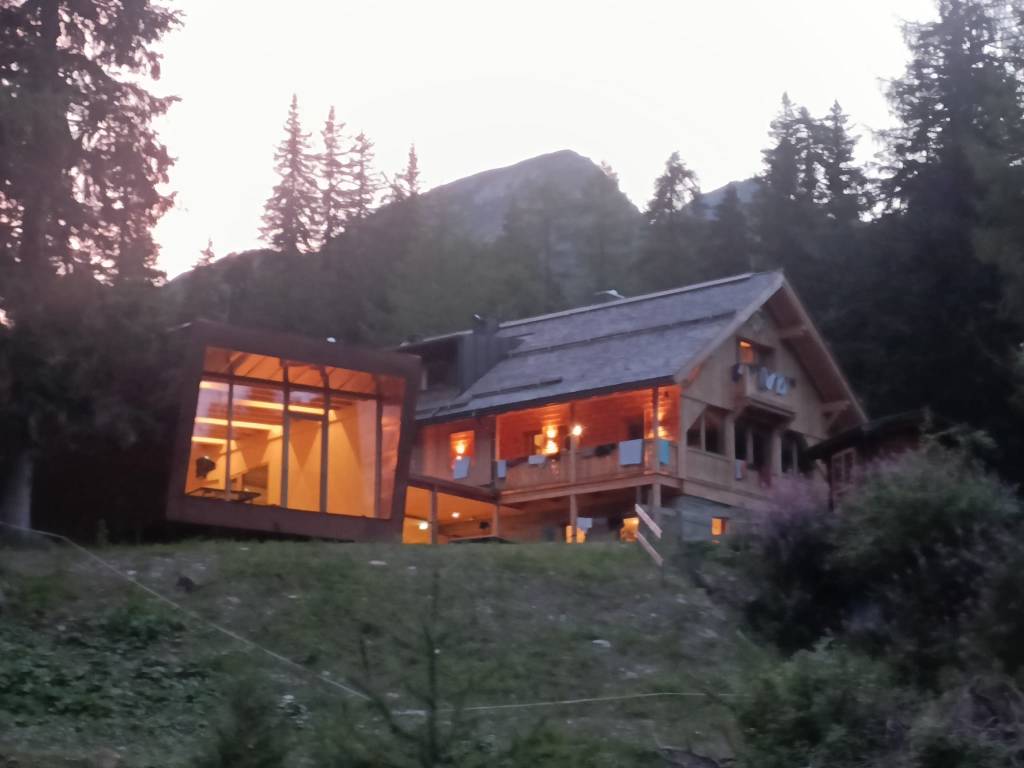
We had to walk up to the cabin, so the walk up was the perfect opportunity to talk to people, practice my German, and enjoy the view. As we rounded the corner, we were all astonished at the quality of our accommodation. The cabin was shaped like a horseshoe had four main sections – the games area (which had a bouldering wall), the dining area, the sleeping area, and the outside area (which had a ping-pong table). We immediately dashed upstairs to check out our rooms. The boys were all in one room, and the girls in another. I can’t say anything for the girls’ room, but our room was incredible. We were in double bunks, yet the mattresses were super comfy.
There wasn’t a whole lot of space, but we didn’t need it, as we spent most of the time outside. Taking a trip outside, there was a large river, which had formed a small plunge pool. I went in a few times, it was absolutely freezing, but it was a good cold, the rewarding kind. One of the campers told me that cold water tightens your skin, and after those trips, I can well believe it. Downstream, there was an incredibly beautiful waterfall. It was small, but easily accessible, and the perfect size for dipping in and out of. I went in several times, and it was absolutely amazing. At a different point in the river, some of the lads built a dam to form a large pool. I didn’t go myself, but supposedly it was great. We had an amazing meal in the evening, chilled a bit, then went to bed. And thus concluded day one.
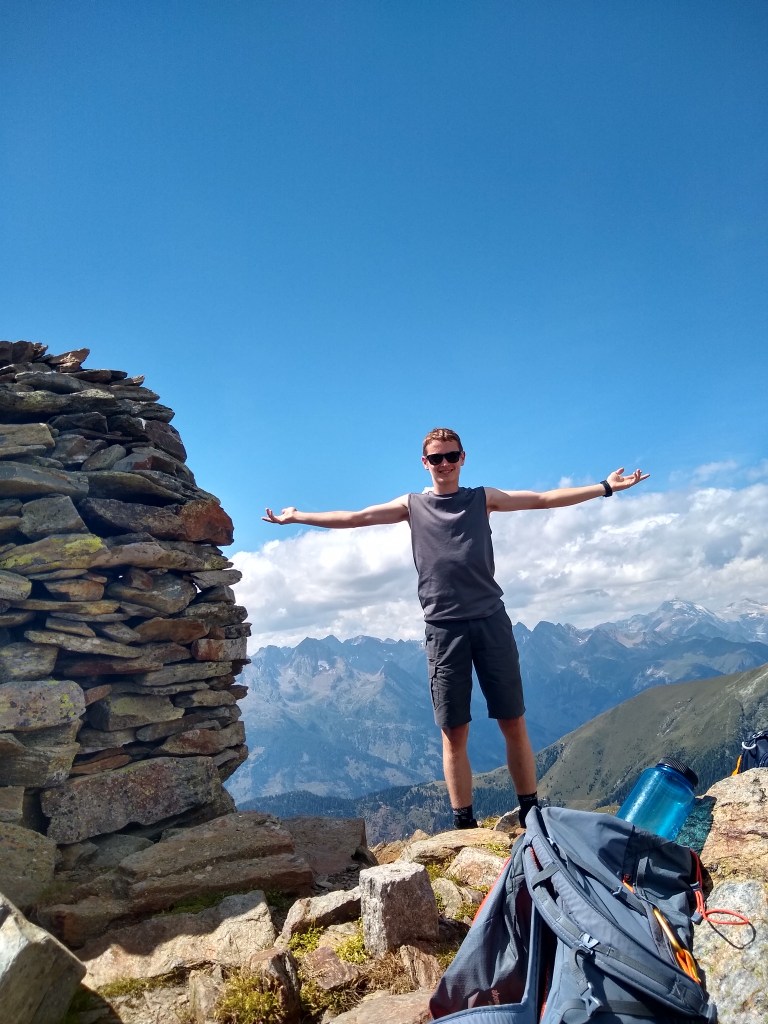
I rose for day two at 6:30 – really early, but the other guys are teenage boys after all, and when two of them got up they weren’t exactly subtle. I practiced some bouldering on the inside wall, and before I knew it the others were up. Breakfast was served, and it was good. We had some language lessons in the morning, after which we rendezvoused and hiked up to the top of a nearby mountain for lunch. Post lunch we had the option to either go back down and do some rock climbing, or take a longer hike. It was a tough decision for me but in the end, I opted to do go down and do the rock climbing, as it’s not something easily achievable here in the UK. I was the first up the wall, and while it took me several attempts to find the best approach angle, I think I made a decent hash of it. After dinner, we made a campfire, and was among the group of those who took a leap of faith in the weather and slept outside.It was thoroughly refreshing experience, and we saw several shooting stars; it was truly beautiful.
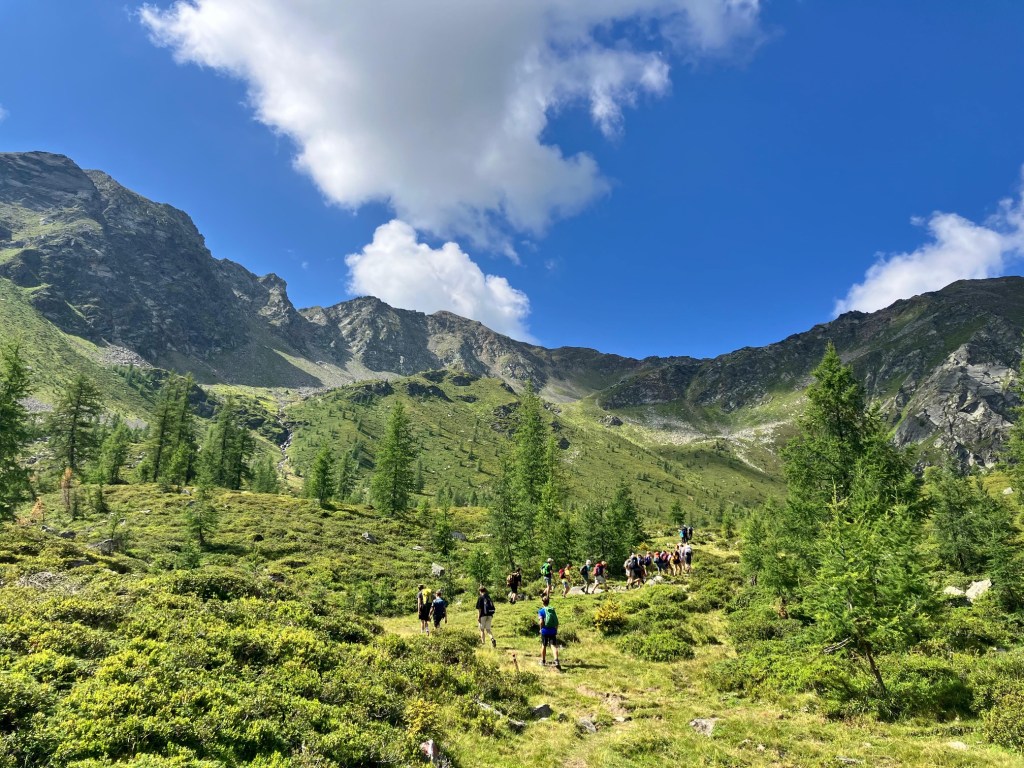
Morning on day three was a slightly chilly start, having woken up outside. It thankfully hadn’t rained, or at least if it had no one had noticed and we were all dry. The day commenced with breakfast and a scramble of getting ready for a hike. We went from the cabin to a place called the Goldberghutte, where we ate lunch, and some of us (including me) bought a skiwasser (a common local drink made using raspberry and lemon). We then hiked back and had dinner. After dinner, we performed a group task, which at the end involved some hectic performances, with some notable occurrences.
At breakfast on day four we were met with a choice. Stay behind to clean the cabin, hike to a lake, or hike up (+viaferrata/klettersteig) a mountain and then drop down to join the others at the lake. I joined the mountain team on their journey up, and then half an hour from the top, I had some fun and ran the last bit. It was great training on the lungs, because we were at extremely high altitude, and it was very steep. I arrived at the top in under 15 minutes – and I’d been told it would be 45. I had a shock arriving at the top to find that two members of the lake team had walked up the other side of the mountain and had been waiting there for over a quarter of an hour. I waited with them for the others to catch up, we had a bit of a break, and then proceeded to make our way down the other side to the lake. Upon arrival, after a quick change, I was straight in the lake. It was surprisingly warm, but getting out was the real hardship. The cold shock from entering was minimal, and once you were inside it was pleasant, but once you got out the cold chill was substantial. We hiked back, ate dinner, and did other various activities.
On day five, we had some lessons, played some games outside, and generally chilled a bit – some of us were a bit sore from the previous day (the wimps). We had a great time just relaxing and enjoying the alpine setting, as well as playing ping-pong. Once again, we were treated to delicious food by our kitchen team.
Day six was our last proper day, and no expense was spared. There was a large team fun run where pairs ran a 3km course, completing challenges along the way. The stations ranged from poetry, food identification and Spanish numbers, to blind directions, tower building, and doing yoga while carrying your partner. Everyone had a great time.
Unfortunately, we had to part ways on the final day, and we hiked down to our original meet point where we said our goodbyes (with lots of hugging), were picked up by parents, and eventually all went our separate ways.
I will be forever thankful to the Jack Bloor Fund for assisting me to go on this trip.
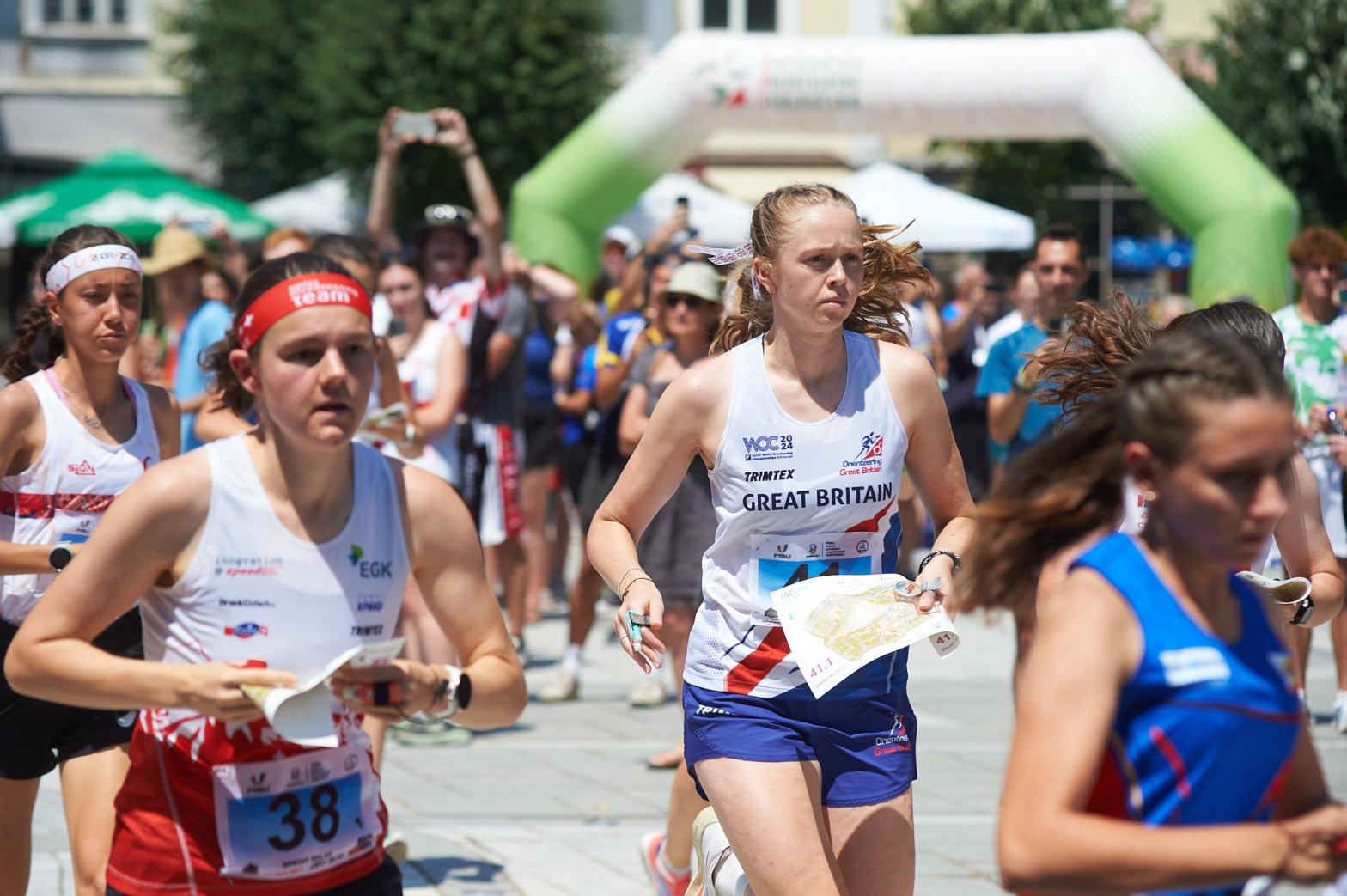
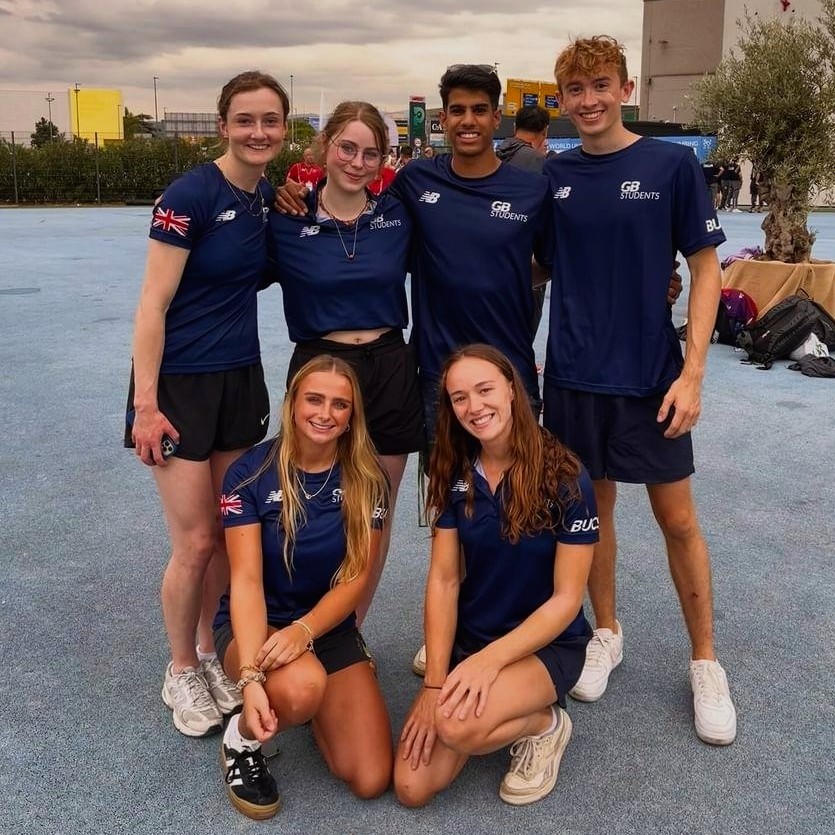
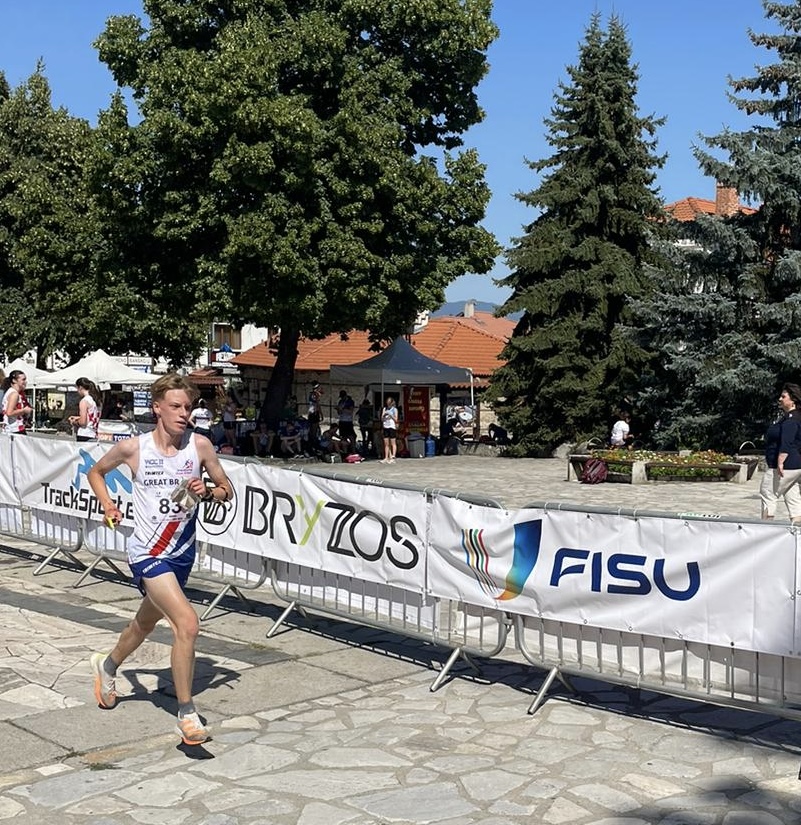
Euan Tryner, South Yorkshire Orienteers, selected for the World University Championships in Bansko Bulgaria.
A great week in Bulgaria, mixed results for me though l had a very good run in the relay (2nd fastest time 🤯 ), which is where it matters most 😊
The highlight though, is definitely the day l wasn’t running, watching the team win the sprint relay was incredible and so inspiring! Hopefully l can be part of the team to try and defend the title in 2 years time.
Finally thanks to Edinburgh University and The Jack Bloor Fund for funding support.
Would you like to be part of the successful Jack Bloor Races? Which helps young Yorkshire sportspeople realise their dreams…?
Four decades have now passed since the untimely passing of renowned Yorkshire sportsman, Jack Bloor, immediately after completing a race in Meanwood, Leeds.
Jack was an accomplished sportsman in his own right, be it fell running, athletics, cross-country, climbing, orienteering, potholing, cycling, etc. However, his greatest gift was in encouraging young people to engage in outdoor adventure sports.
Jack won Burnsall Fell Race in 1951 and helped establish the classic Three Peaks Race, winning it in 1956. He mastered the Bob Graham Round in 1979 and completed many Karrimor International Mountain Marathons. Jack served as President of the Gritstone Club, Chair of Yorkshire BMC, County Mountain Advisor to the Scouts and claimed many first ascents rock climbing in the Lakes and Dales. He was an active member of Leeds Cave Rescue Team and coached many junior orienteers to senior level. Jack’s contribution and influence was extraordinary.













 Jack Bloor Race & Fund