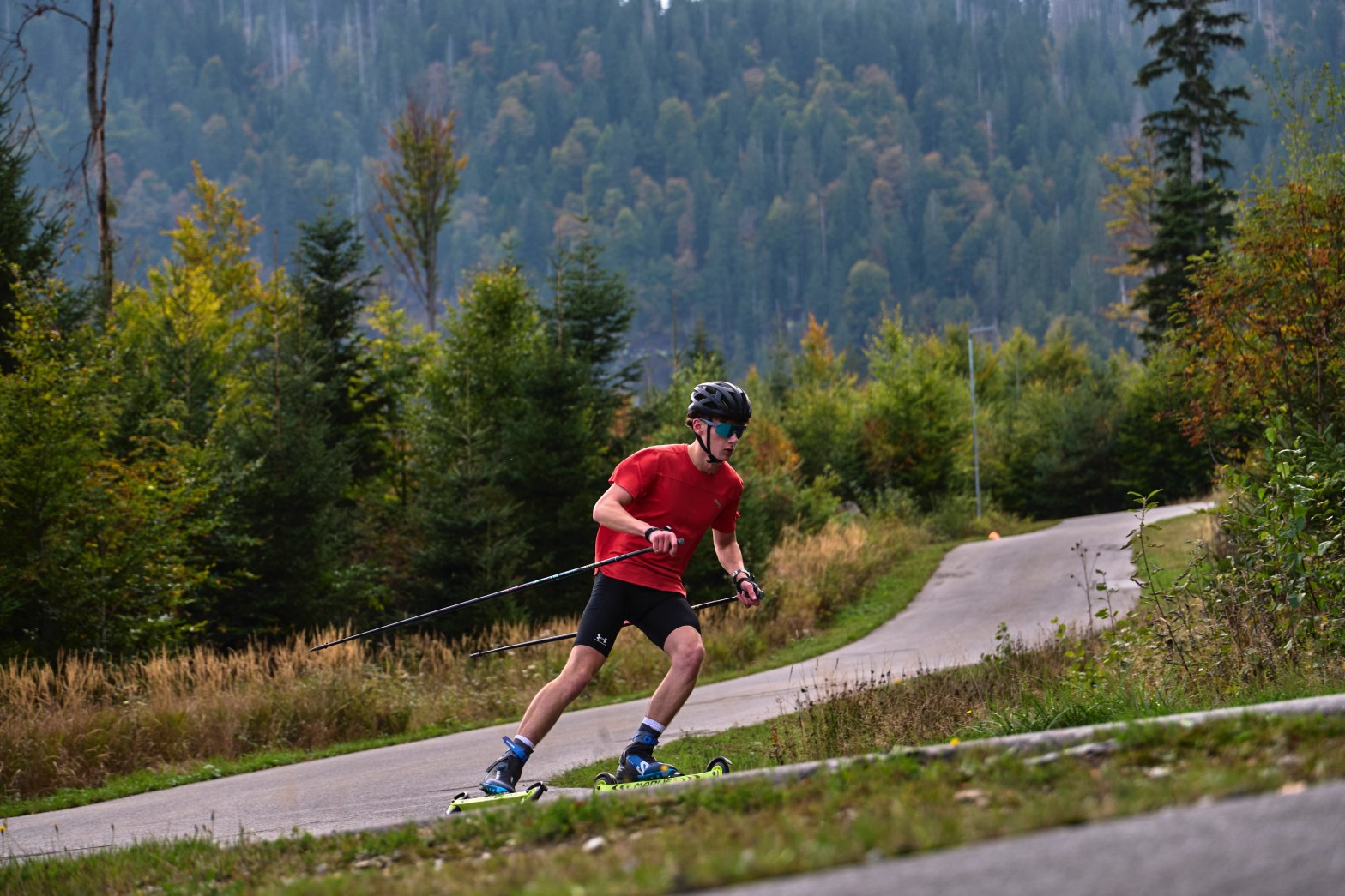
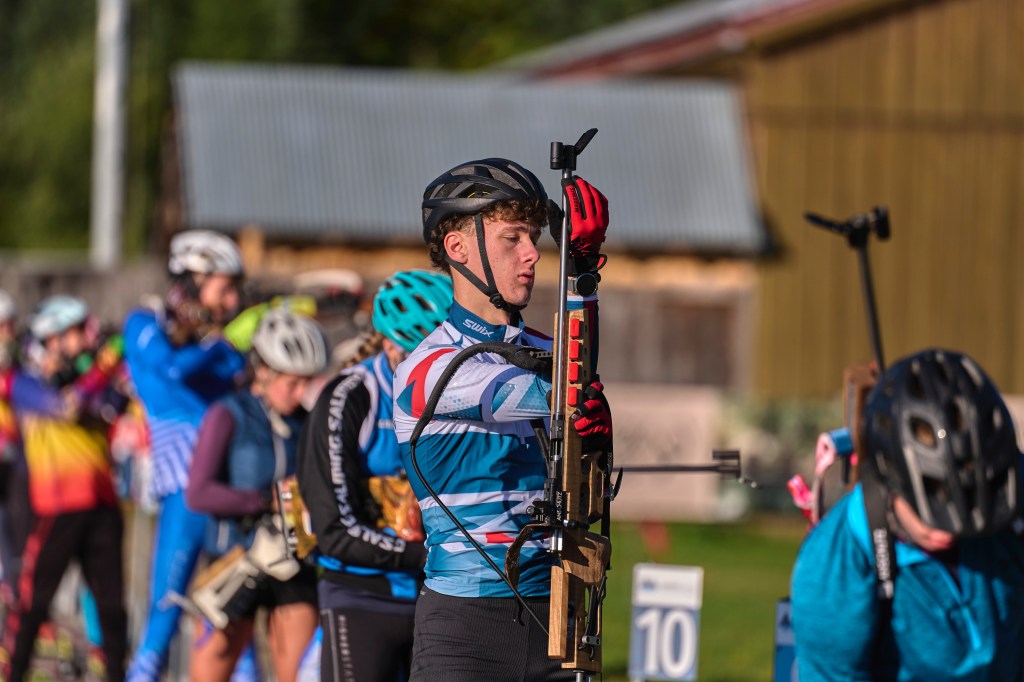
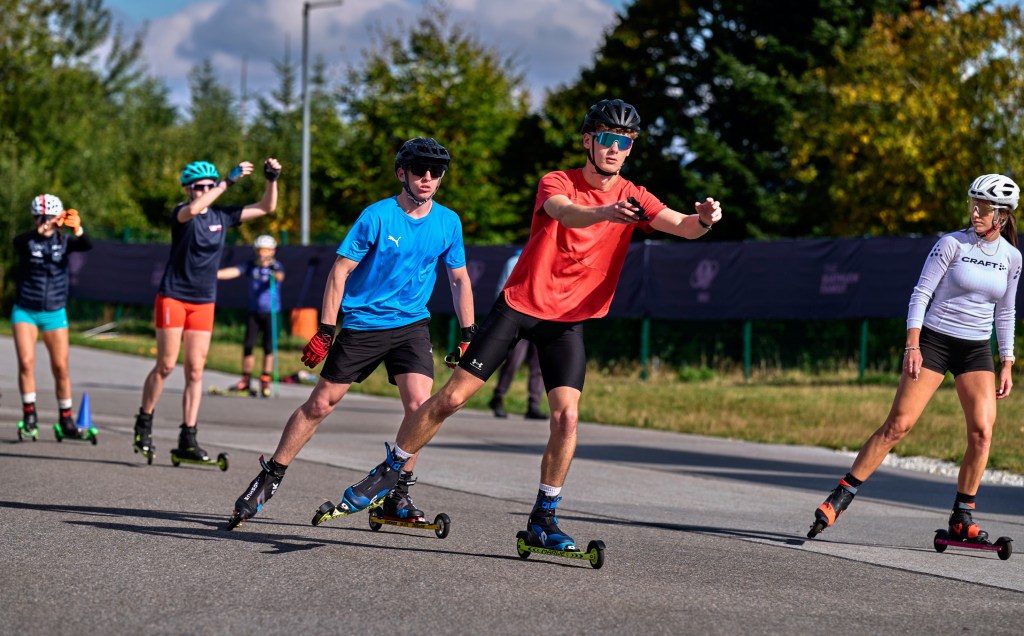
During my in Arber Germany I had the chance to experience different cultures, training styles, and new ways to cope with before and after races. The International Biathlon Union (IBU) required 4 athletes from each chosen country to participate in the camp to develop as athletes, and I was lucky enough to be chosen to take part in the camp. The countries varied from places like Estonian all the way to Brazil, and Chile. This have the camp an amazing atmosphere where during the evenings people could share there different cultures even if there was a language barrier.
The coaches that the IBU provided where highly skilled and knowledgeable with there teachings as well as bringing a positive attitude towards the sessions. The coaches also varied in nationalities which gave for a wider range of coaching styles that the athletes can use to develop there own skills and techniques. Having a coach that you can talk to and rely on also makes a massive difference to how you as an athlete train and compete, and this is what made these coaches stand out from other coaches. From my experience when I didn’t get something correct the first time they didn’t give negative feedback but instead they said how we could improve the exercise or find a new drill that could give the same benefit as the other, and this is what made them perfect for this camp helping undeveloped counties who might not have the services or opportunities to grow as athletes.
In the evenings all the countries gathered together to have evening meetings to showcase was to develop as athletes. An example would be that one of the nights we had a highly skilled coach come to talk to us about what makes a good athlete and how to prepare for races. And what he said was to “have a simple plan” this plan would include your warm up what you eat and what time you do things ether day before race day, or on race day. Additionally he also told us to write down a “what if list” to get ride of race day nerves as this is “wasted energy”. I found this the most useful out of all the meeting that took place during the camp because it helped me to change the way I view competing in races making me more efficient.
Finally at the end of the week we had a mixed relay where you have to shoot 5 shots prone and 5 shots stand and where the total circuit was a distance of 5km. This race I felt like I was most efficient with both shooting and skiing due to the fact that I put into practice what I had learnt during that week to the best of my ability.
In conclusion the Jack Bloor Memorial Fund has helped me to be able to travel to this amazing place with the best facilities and coaches to help make we the best version of myself.
Once again I would like to send a massive thank you to the Jack Bloor Memorial Fund.
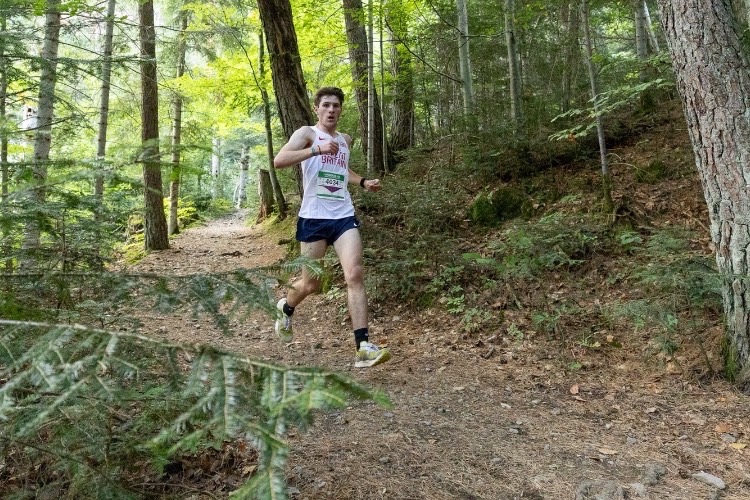
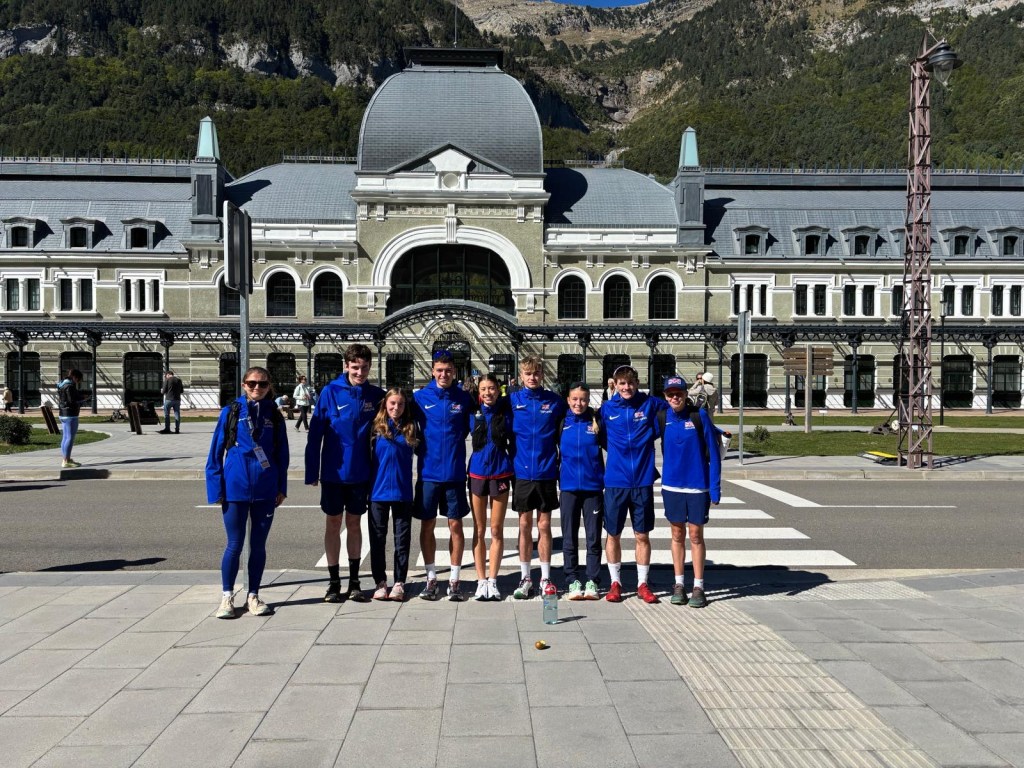
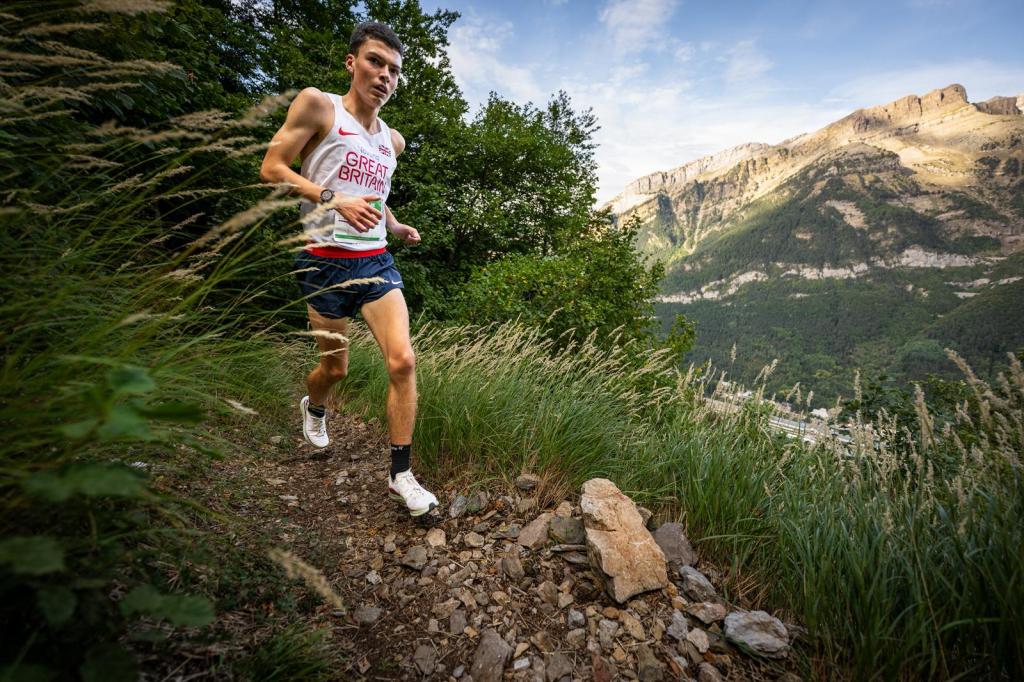
Finding out incredibly late that I was going to be running for Great Britain and Northern Island became the first challenge of the week! With only a day to book flights and trains, pack kit and prepare myself for the World Mountain and Trail Running Championships in Canfranc, Spain, this was only made possible with support from the Jack Bloor Fund helping cover costs.
It all began on Thursday the 25th September at 4am driving to the airport ready for a long day of travel.
On the Friday we had the opportunity to walk the course, a fast start and finish, with lots of switchbacks in the middle-my favourite! On Saturday we relaxed and had a pre race meeting. Sunday was the big day. We had an early start (an even earlier start for the U20 Women!) to get to the race in time for warming up and then it was race time. Our race was over a 7.8km course with 400m of ascent.
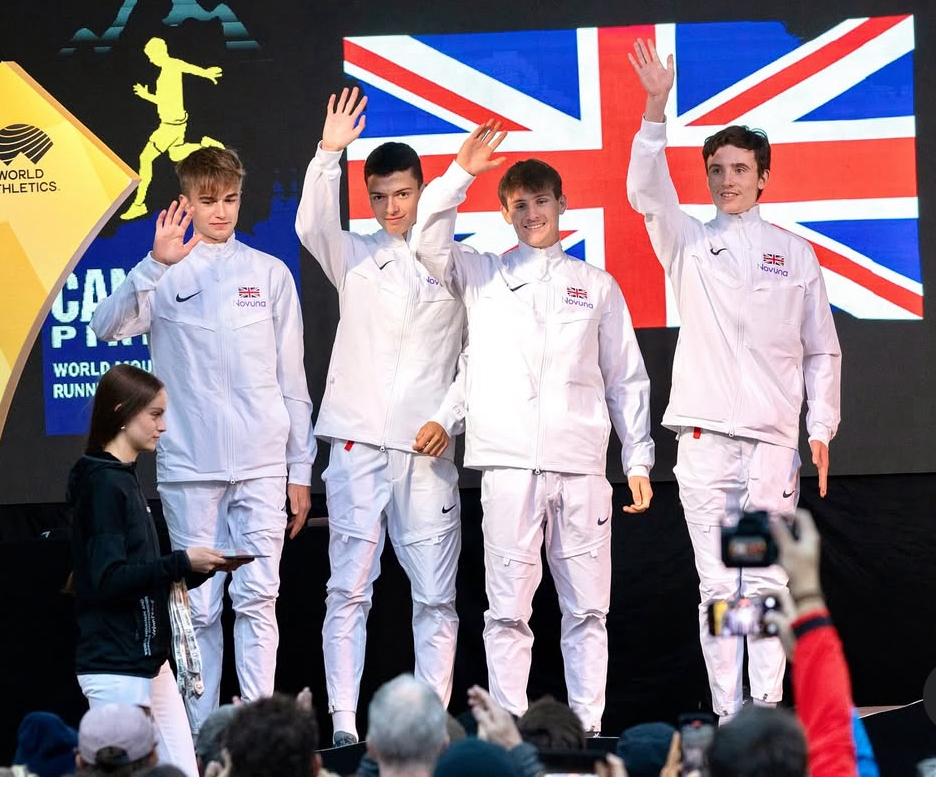
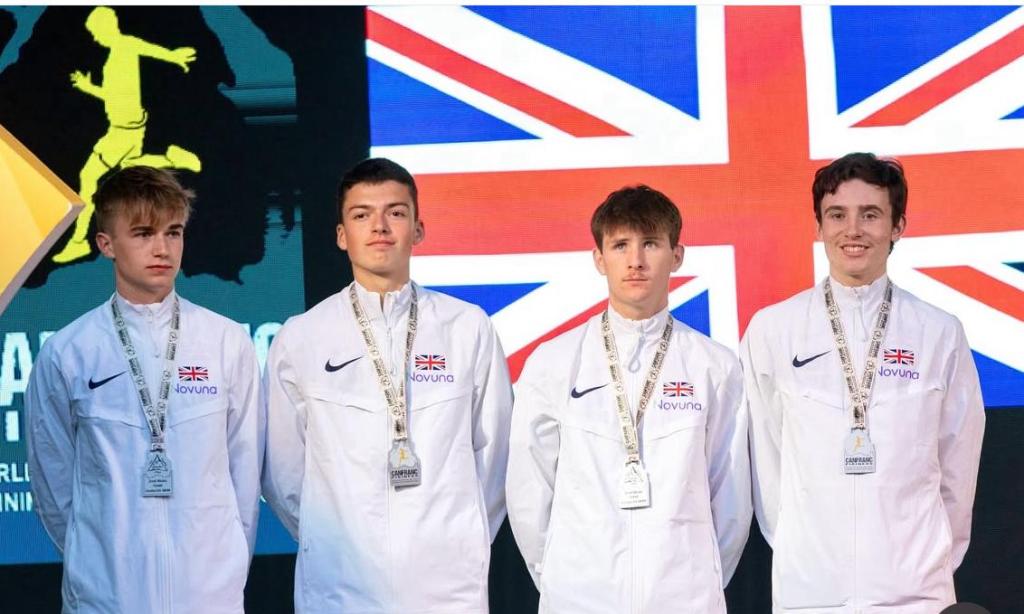
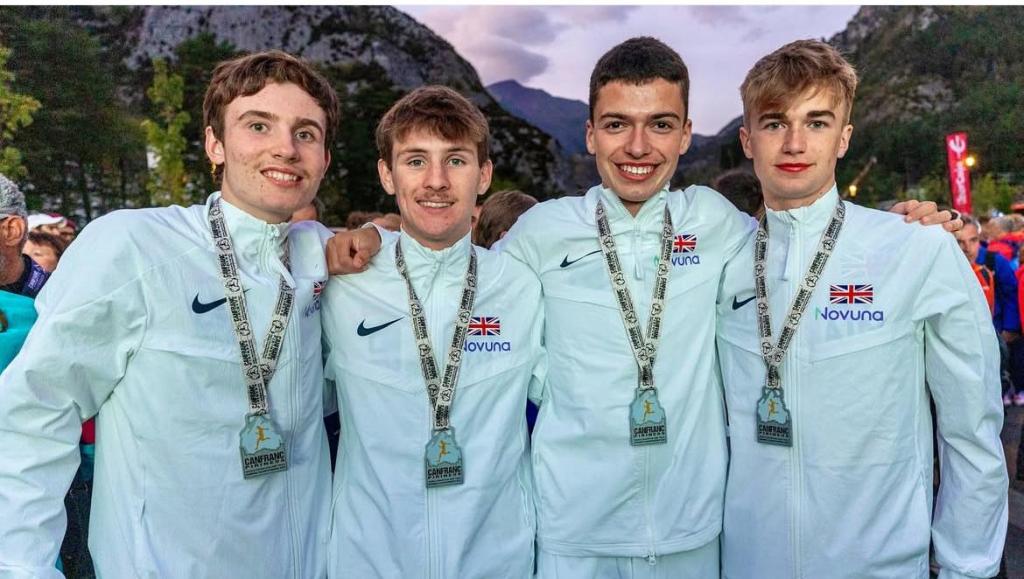
It was an incredibly fast and aggressive start which left me entering the uphill switchbacks quite far back in the field. As the pace dropped I started to work my way through the field pushing with my teammates to keep going. At the top I was in 12th and now for my favourite part! Back and forth through the woods I managed to catch two more places and finished 10th overall! I was over the moon with my result but wanted to see how my team had done. Were we in with a chance of a medal? Uganda took first team clearing up all the medals individually too! But with my teammates Jack Sanderson in 6th, Ewan Busfield in 13th and Rowan Taylor in 28th we got second team!
I had such a great trip made better with such amazing people.
Thanks so much to the Jack Bloor Fund for supporting me I am incredibly grateful.
At the end of September this year I travelled to Molveno, Italy, to race in the Xterra World championships at the full distance race. Which would be my first off road triathlon race at an international level and only my second I have done after Weston Park earlier this year where I qualified for my slot in this race. Thank you very much for the generous support of the Jack Bloor Fund and Trustees for helping to make the trip possible.
I was incredibly excited to race on what looked like an incredibly picturesque, tough and exciting course, in one of the clearest lakes I have seen and some of the most amazing mountains my main aims due to being a relatively new discipline to me being to perform my best and enjoy myself.
My swim set me off to a good start, I managed to follow the slightly faster swimmers ahead, allowing me to exit the water in 8th place, placing me well as I went through transition and then out onto my two laps of the bike course.
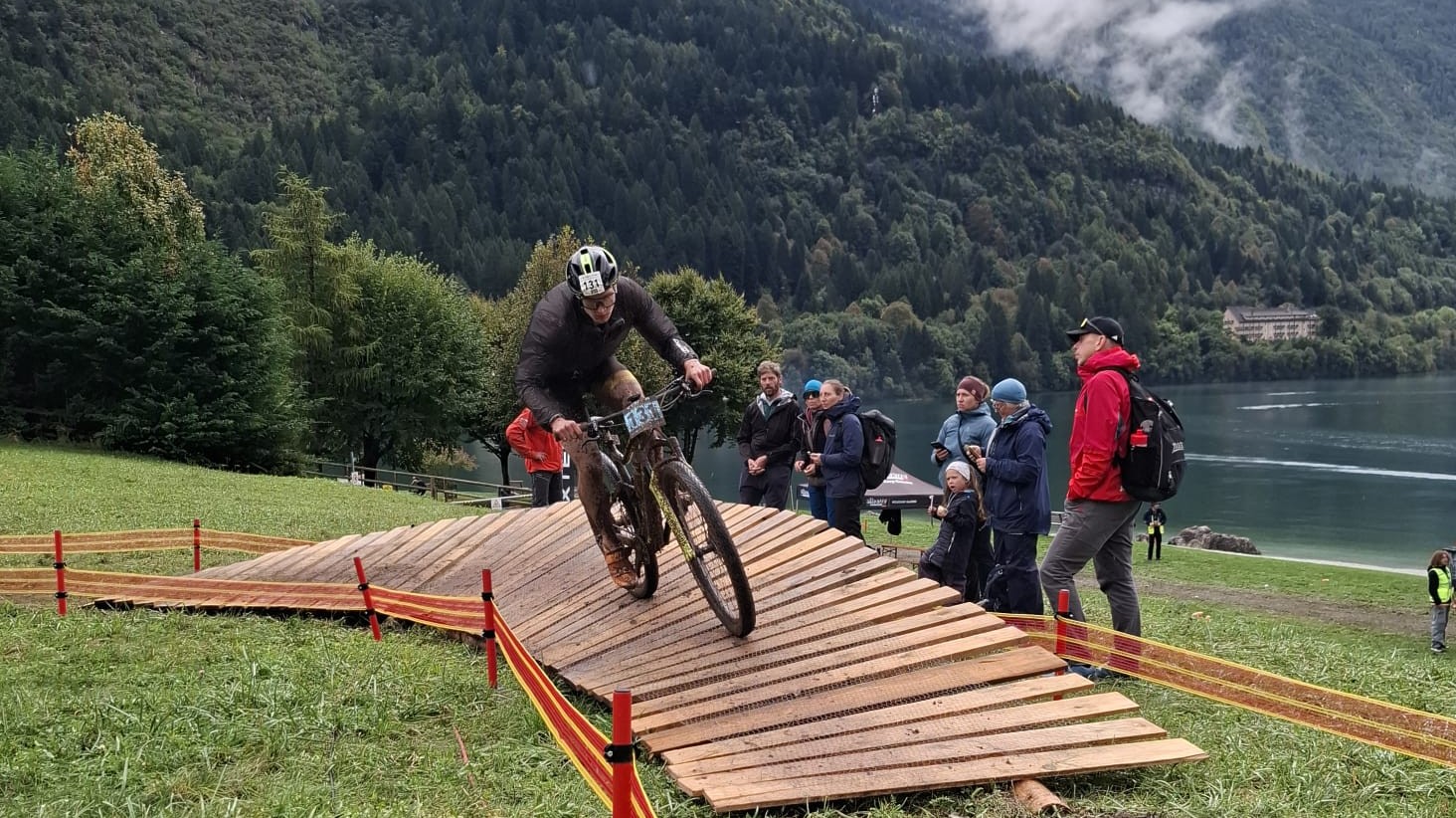
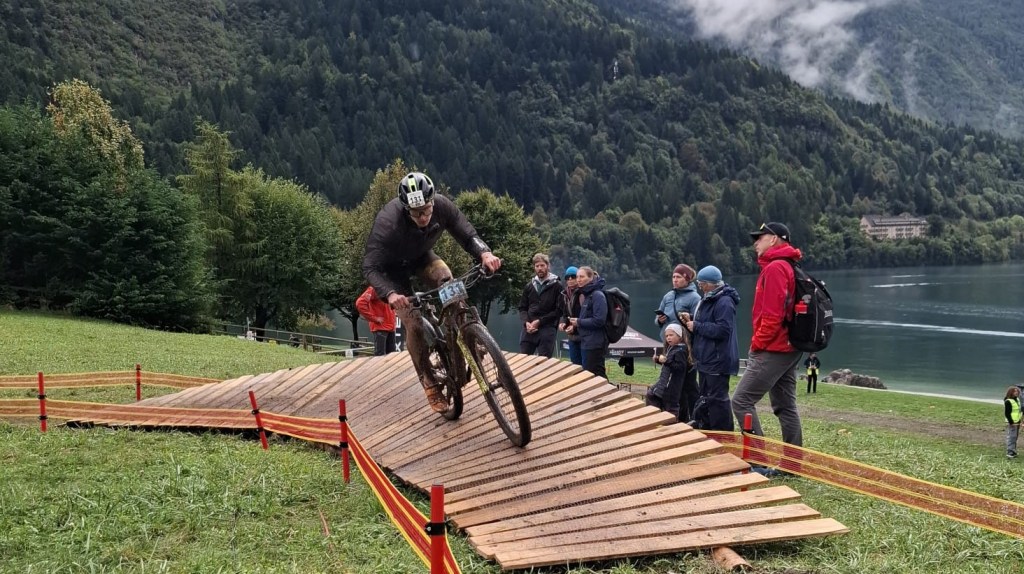
Due to incredibly wet weather in the days beforehand the bike course was incredibly tough, with some uphill sections so boggy it was rendered almost unrideable, and the mud was sticking to my tyres and blocking up my bike frame leading to an uphill which was a combination of riding and hopping off the bike to run through the sections with no traction. The downhill then started off on a well-maintained trail where I could gain time back on people, before leading into a challenging section on more slippery mud. Once back in the town there was a combination of stairs, drops and ramps around the transition area, which was a very fun sector before the lap started again.
Unfortunately, on my second lap during the uphill section my bike became too clogged with mud, leading to my chain repeatedly coming off my front chainring. Despite this I managed to find a gear where the chain would stay on and get to the top of the hill and then tackle the descent to bring me to the end of the ride.
I felt good on lap one of my 10km run, settling in on the flats, pushing the uphill and navigating myself through the technical section. My second run lap started similarly, but in the steep uphill my efforts on the bike caught up with me, with my quads starting to cramp. However, I carried on pushing and managed to hold the cramp off to get to the finish.
Overall, this was probably the toughest race I have ever completed, with the extreme conditions presenting unexpected challenges. While I placed slightly lower than hoped, finishing 12th in my age group is a result I’m proud of. I had a lot of fun, pushed my skills to the limit, and look forward to competing in more Xterra races in the future.
Thank you once again to the Jack Bloor Fund and Trustees for supporting my goals and making this amazing trip possible.
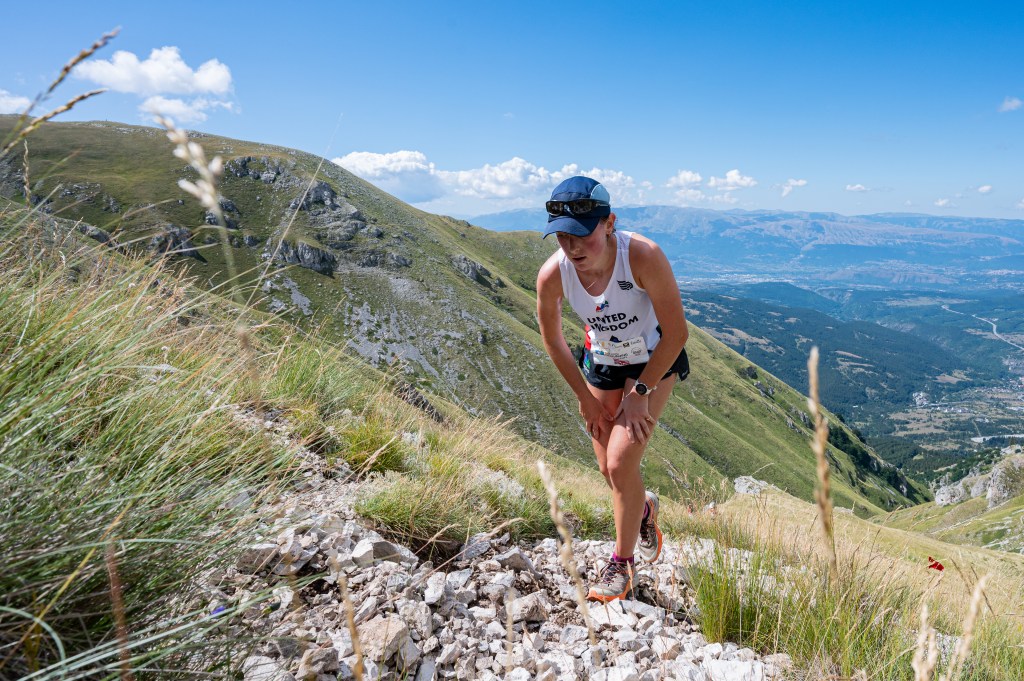
In September, the Jack Bloor Fund was able to fund my trip to the World Mountain and Trail Running Championships in the Pyrenees in Canfranc, Spain, in which I competed for Great Britain. This trip was my favourite international trip I had been on, as I got to experience a new place and compete at the highest level in the sport, in some magnificent scenery. It was made even better by the people I shared it with and the support I received from the team, athletes and staff.
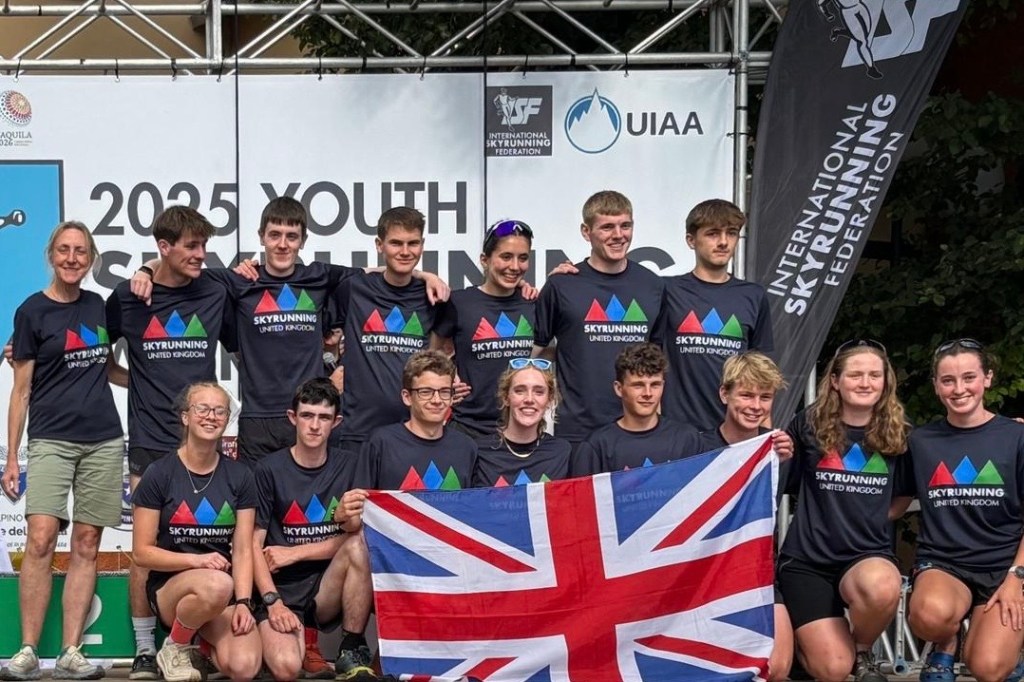
My race covered a distance of 7.8km with 400m elevation gain, over some stunning trails in the Pyrenees. I had one of the best races of my life, coming 6th in the U20 men’s category, which left me over the moon with my result. Alongside my result, my teammates also had great races, allowing us to achieve a team silver medal, behind Uganda in the gold medal position.
Without the support of the Jack Bloor Fund, this opportunity wouldn’t have been possible. So, I am extremely grateful for the result I was able to achieve and the experience I gained.
Photo Credits: Jamie Rutherford and Marco Gulberti
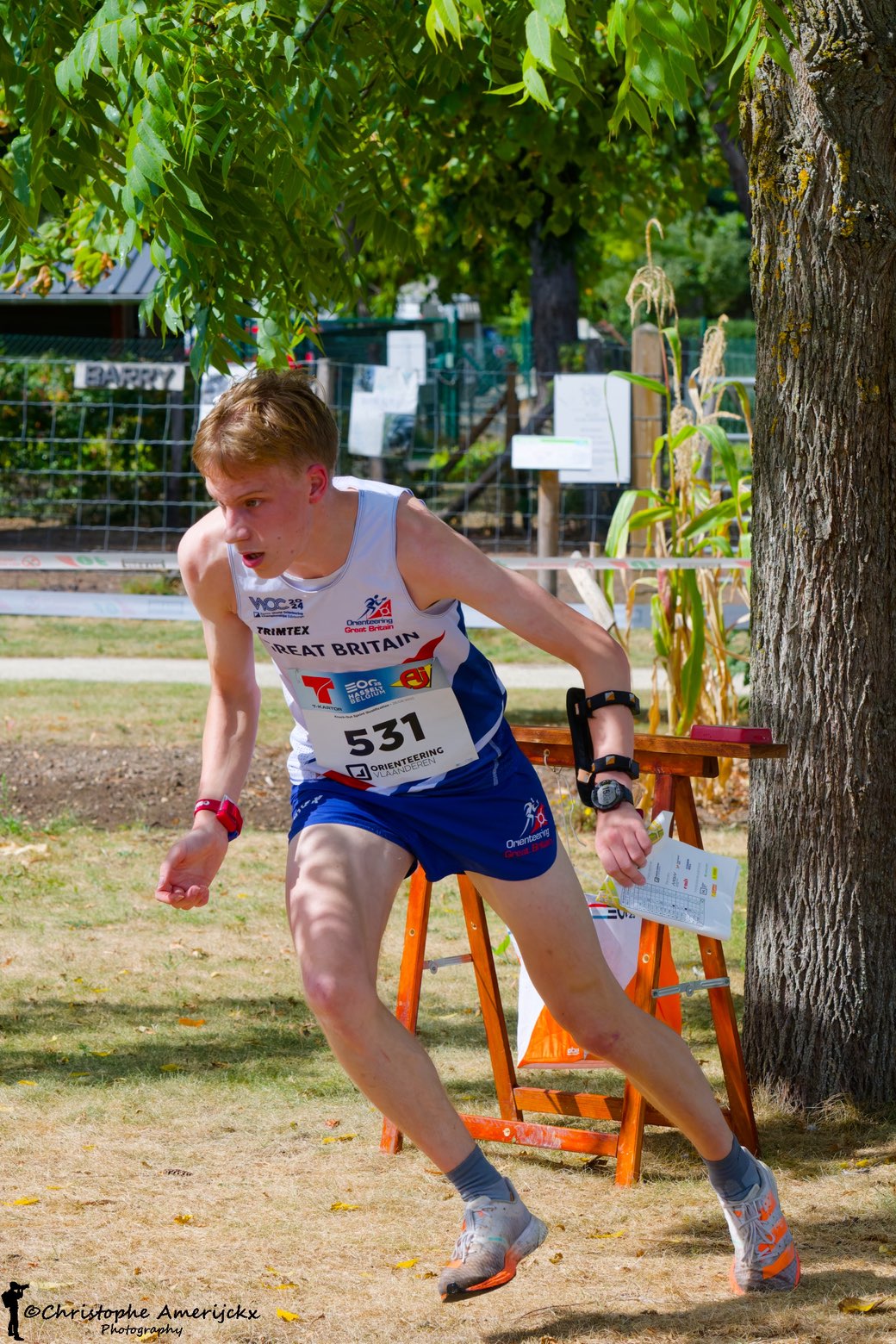
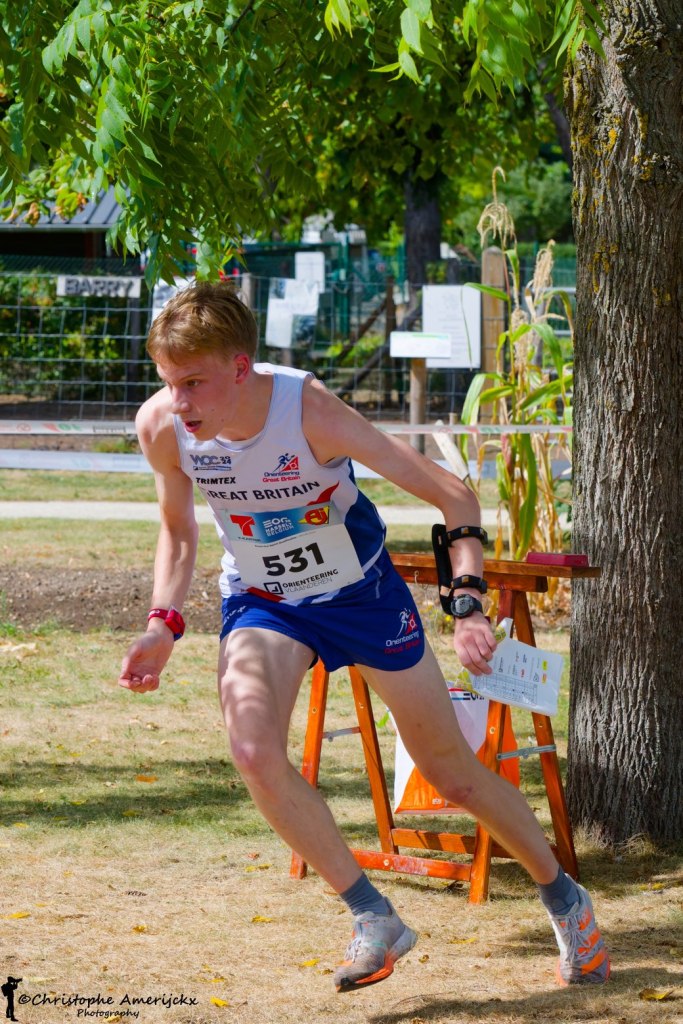
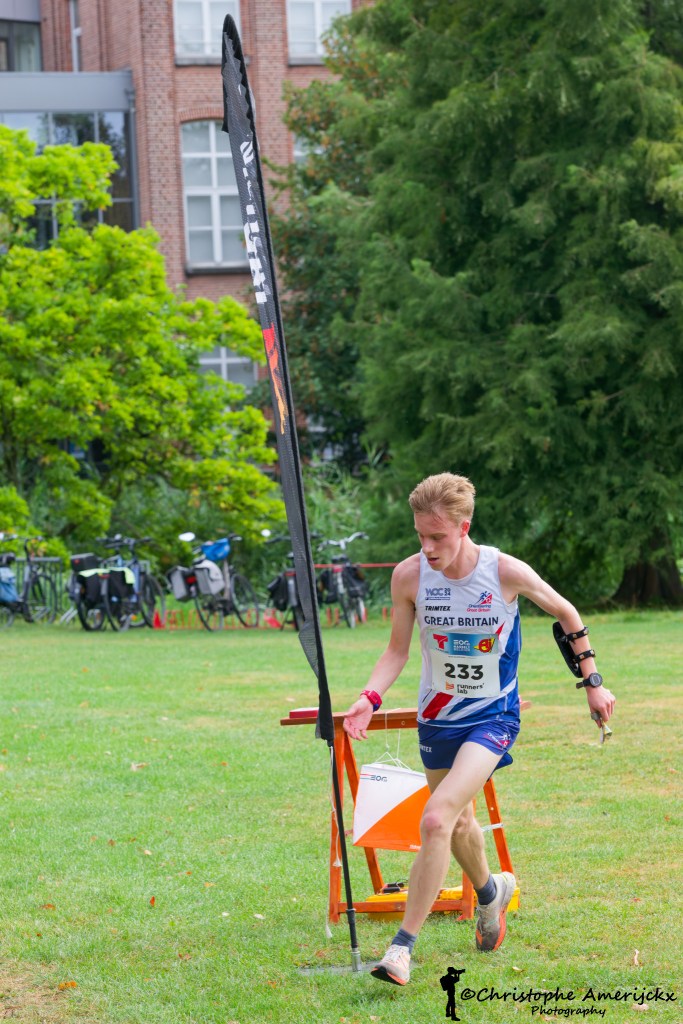
This year’s European Championships were held in Belgium, with a focus on the sprint disciplines as the World Championships had been in the forest. It was my first sprint competition as a senior so whilst I didn’t have high expectations, I was nonetheless excited to gain some more experience.
The first race was the mixed sprint relay, which I wasn’t competing in, and a crazy race saw GB claim 5th place which was a great start to the championships. Next up was the knockout qualification, where the margins were fine. I was happy with my race, being just under 30 seconds of qualifying. The highlight for the team here was Freddie making it all the way to the semi-final. The final competition was the individual sprint where I made a frustrating mistake at the map flip which put me out of the running for qualifying despite a good race otherwise.
Overall, I was happy with my performances and have learned a lot of lessons for the future. Many thanks to the Jack Bloor Fund for making it possible!
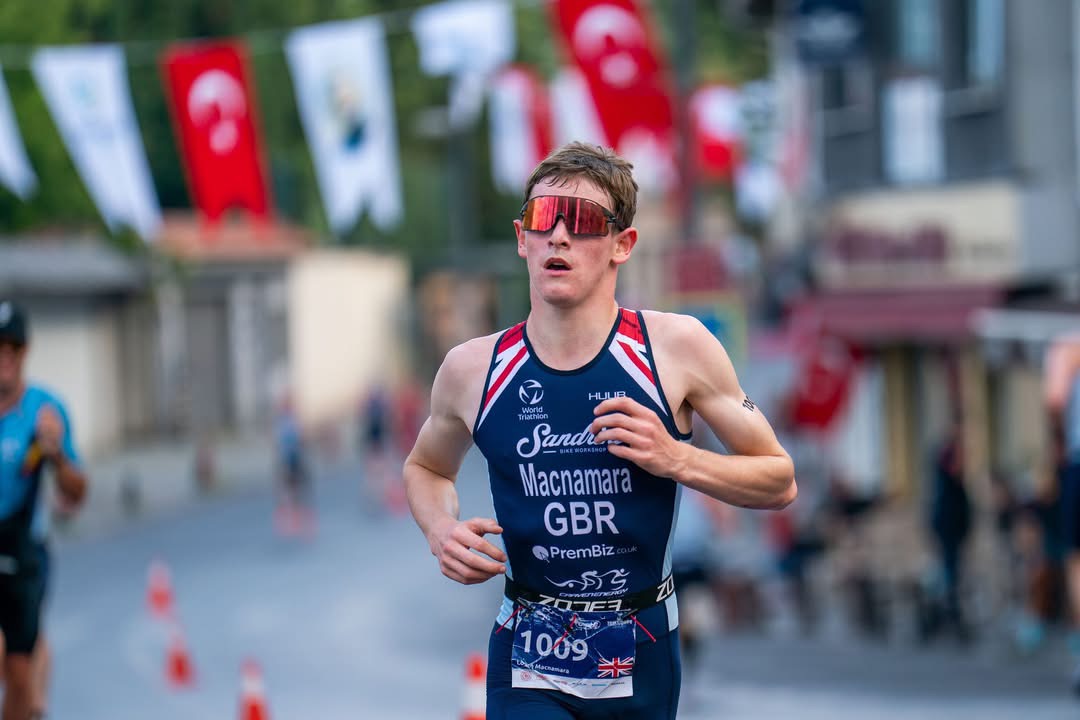
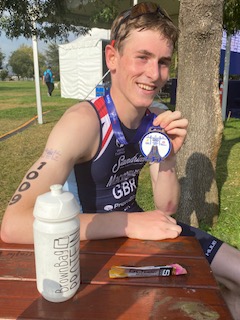
7th in 2025 European Sprint & Standard Distance Triathlon Championships Istanbul.
Have to be honest and was gutted I didn’t get on the podium but I’m still 16 and racing everyone under 20.
It was a REALLY tough course. Swim was in the Bosporus with jelly fish and huge freight tankers going past and strong currents.
Huge long steep hill climb up the bridge that connects the Asian and European sides of Istanbul. (3k and very steep climb). I was in a group but lead it and everyone else point blank refused to take any turn to lead-despite me shouting a lot! No choice but to do all the work up the hill. Once at the top they sped off as they had fresh legs. I managed to catch them back up and get back in the group.
The cycle ended up being 26k rather than 20 as the race officials messed up with the course. Steep hill back down to transition.
Legs were goosed (understatement)- by the time of the run. 2 laps. I’ve never felt my legs that dead before!
The run was extremely hard. No flat bits and no feeling in my legs at all. Just putting one foot in front of the other.
Stupidly missed the finish as was lapping others and no others going into the finish. Mum caught me going round for a third lap! Realised once mum was screaming at me!! Lost my 6th place that I’d held throughout and ended up 7th. 😡
So a bit gutted but in hindsight sight after putting things into perspective – overall I was the youngest there and came 7th in Europe.
The experience was amazing. To be part of a team was amazing. Having others from Craven Energy Triathlon and Multisport Club there was amazing. Just AMAZING!!! 🚀🤣
Time to re set and think about the world champs In Oz.
Thank you to everyone who has supported. I wouldn’t have been able to go without you and my sponsors The Hare and Hounds Inn, PremBiz Ltd – Print & Embroidery, Dean Majors, and Sandrini Bike Workshop . Big thanks too, to the Jack Bloor Fund, who awarded me a grant.
I don’t know what I would have done without Alberto Sandrini this last year. Even down the to day before I was due to fly out- my gears went and Alberto came to the rescue. You are awsome- thank you.
And lastly to Craven Energy Tri Club and Mark Taylor and Tracey Hodgson my long suffering coaches! And to Cos-( Jack Dillon). I wouldn’t be doing triathlon without you.
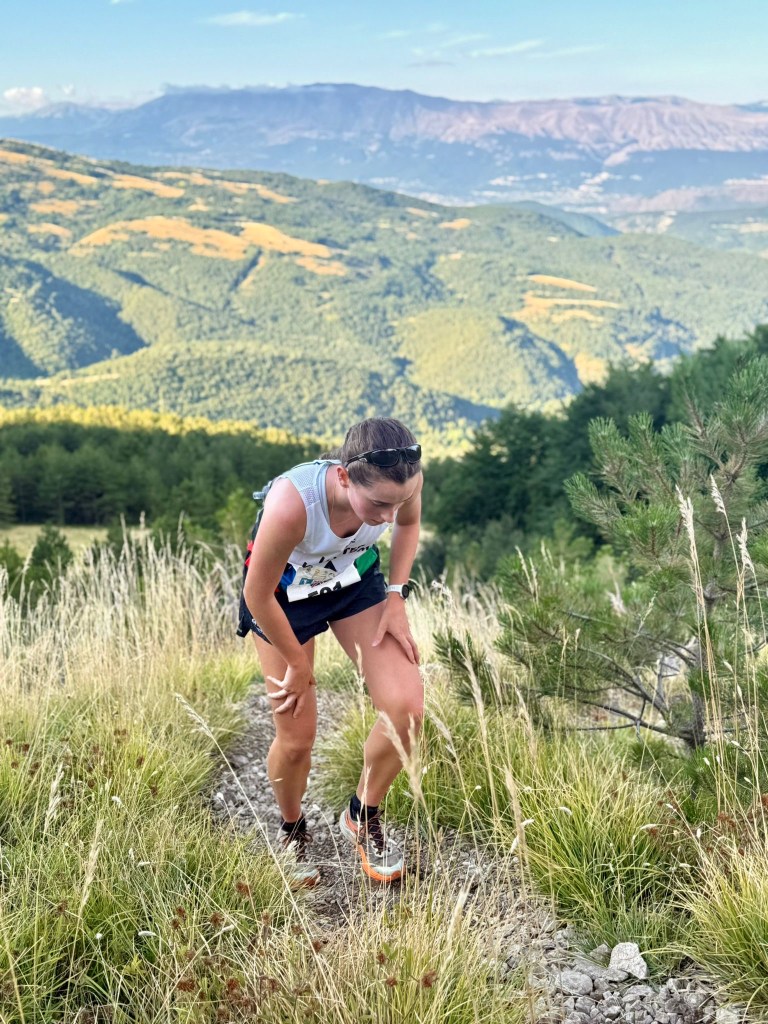
This year I was fortunate to be financially supported by the Jack Bloor Award whilst training for the Youth Skyrunning World Championships. The money awarded went towards my gym membership which was part of a bouldering gym. Trying to maintain training alongside completing my final year of university was demanding and I valued the social element of bouldering alongside my gym sessions- having the support of the Jack Bloor award helped me to combine my physical training and support my mental health without increased expenditure as a university student. I’m very pleased to say it paid off!
I placed 7th in the U23 World Championships in Italy and with another 2 years left in this category l am looking forward to seeing how I can further progress. The race was 23km around Grand Sasso area with a highest elevation of 2950m at the top of a technical summit lined with climbing ropes.
I am exceptionally grateful to the Jack Bloor Fund and to the Jack Bloor Trustees for supporting my goals which no doubt helped me complete the event most importantly injury free! Fell and mountain running play a huge part in my life and it’s through the ongoing work of these organisations that allow young athletes to progress in their sport alongside work, university and other life commitments. Thank you!
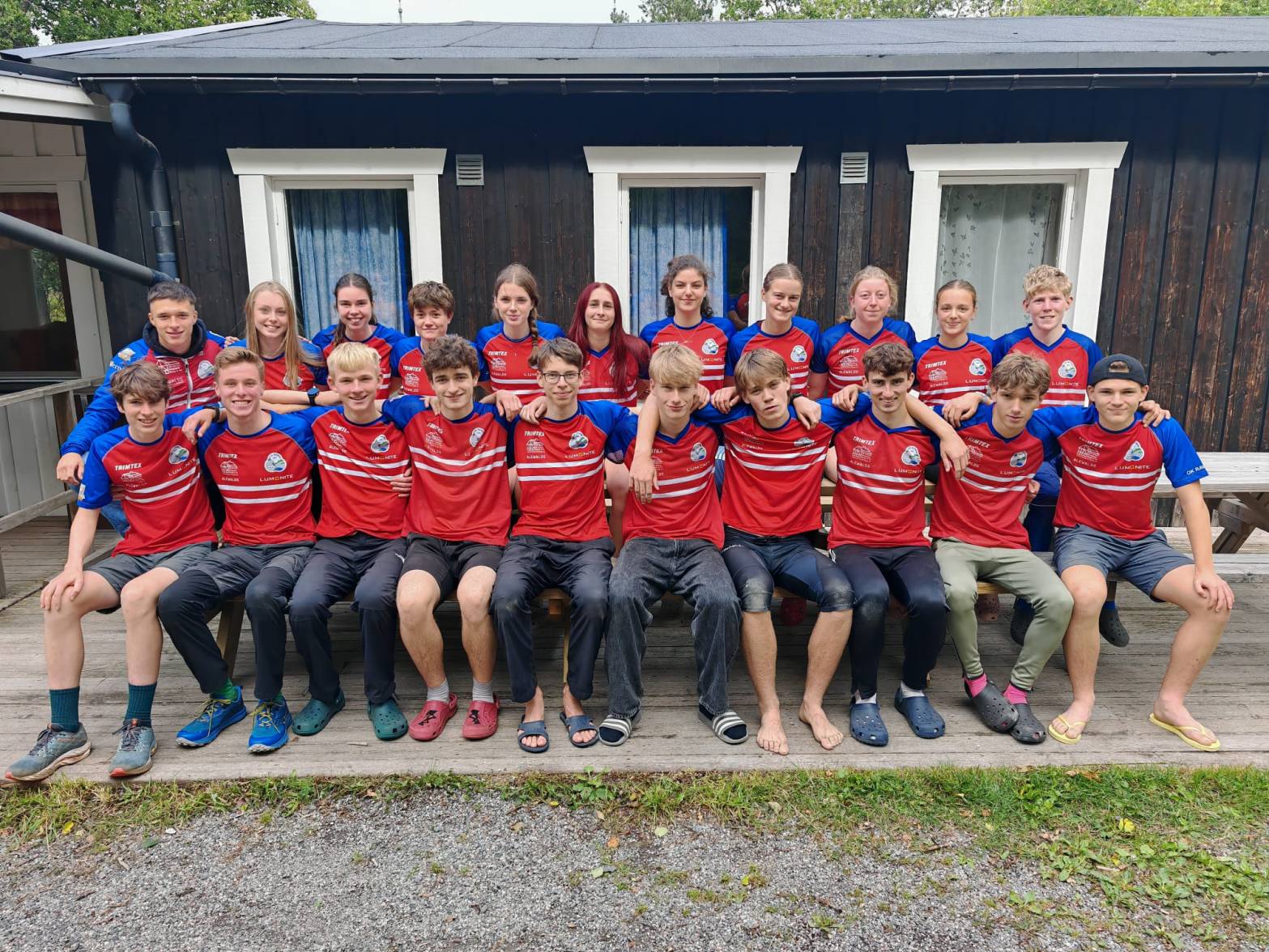
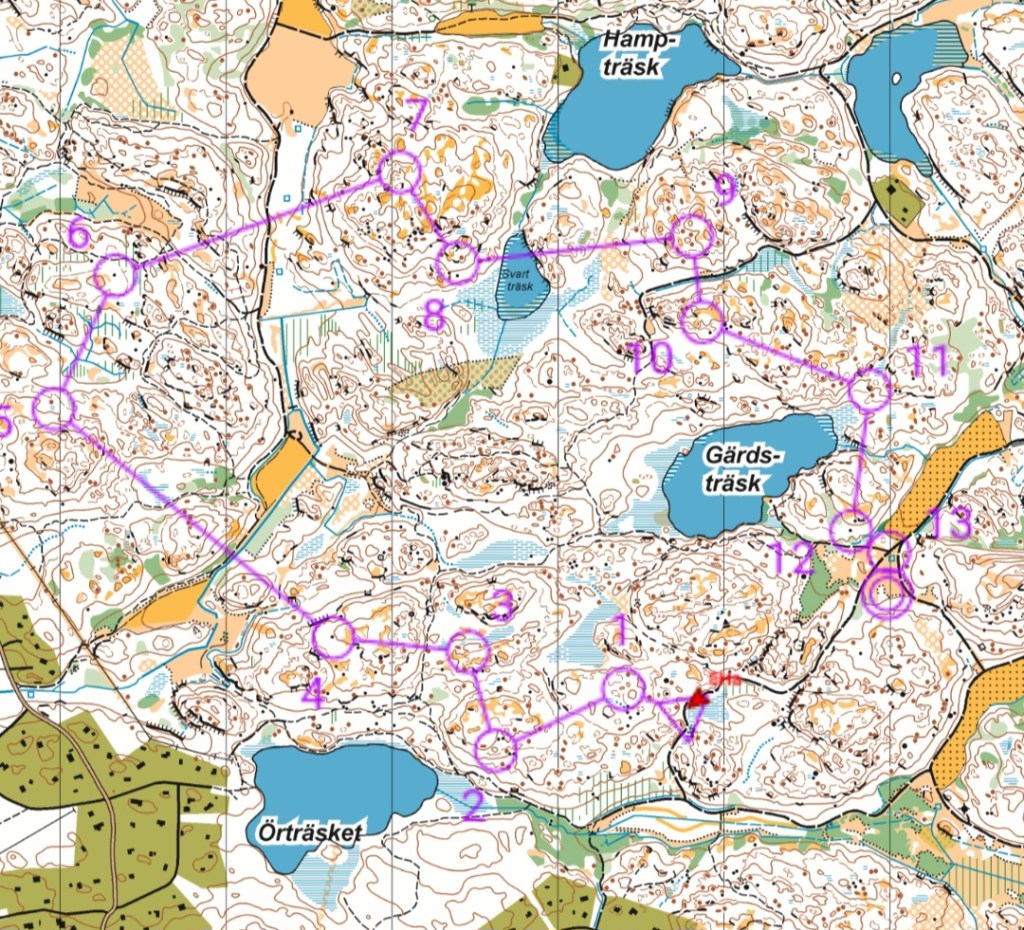
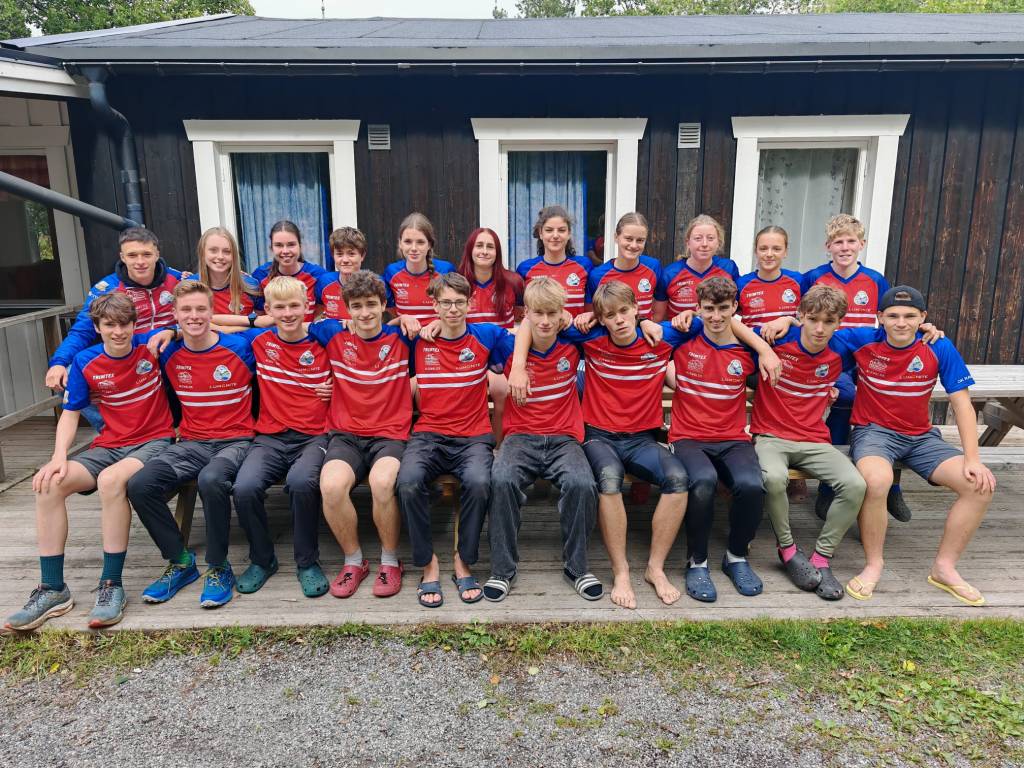
This summer I was selected to go on the JROS Stockholm Tour, a two week orienteering training camp, based at the OK Ravinen hut just south of the city.
The terrain was incredible, especially as it was my first taste of Scandinavian orienteering. Although the complex contours and rock detail confused me at the start, after a week I felt more confident.
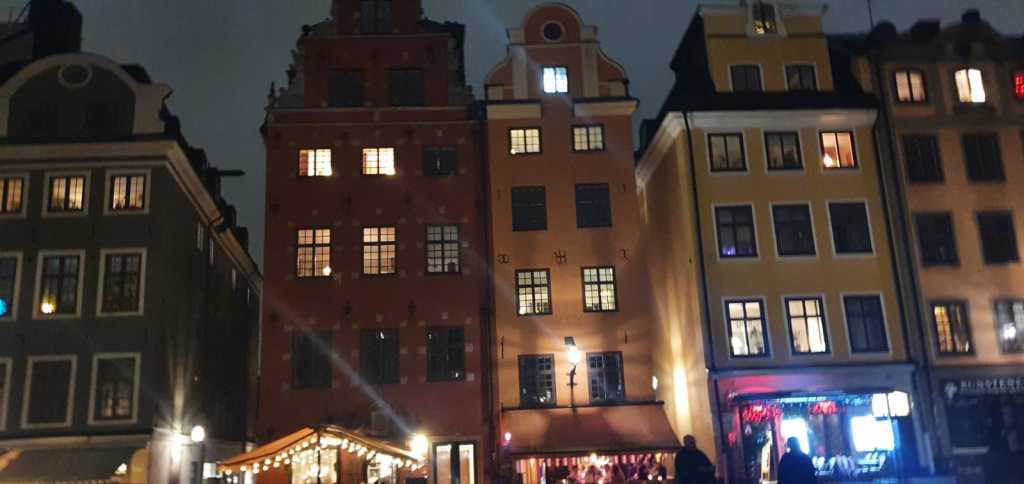
As well as the orienteering, we swam in crystal clear lakes nearly everyday, followed by a sauna, and enjoyed Swedish cuisine like Bilar, Gifflar and Pick n Mix. On the rest day we had an afternoon at Grona Lund theme park, followed by an evening exploring Stockholm centre.
We competed in four races over the fortnight, and although the results were not what I wanted, it was a great learning experience (especially in relocation exercises!)
I decided to take the train the Sweden, inspired by Innes Fitzgerald (see article), and combined this decision with an interrail taster trip, visiting London, Brussels, Hamburg and Stockholm on my way to the training camp. I met many people from around the world (Peru, Ukraine and Switzerland), some of whom I met with later in the week again for ‘Fika’, an amazing experience, and one of the many reasons I took the train, and will do so again in the future.
Thank you so much to all of the volunteers coaches, and the Jack Bloor Fund, who have made this experience possible for all of the athletes.
Towards the end of July, I caught the train up from Leeds all the way to Aviemore. Many of the participants met up on the journey. Coaches met us and drove us to Lagganlia outdoor camp, our accommodation for the next orienteering filled week. 23 upper year M/W14s had been selected to take part in this prestigious training camp based in the East Highlands. Lagganlia is a yearly event, each year taking up to 24 new juniors. We arrived on Saturday evening and were soon getting to know other people through icebreaker activities. Friends were already being made, and we could tell this was going to be a very fun week.
Day 1
After an 8 o’clock breakfast we headed out to Heathfield for a day of map practice, rides and wasp nests. In the afternoon we headed a little way down the track for a star relay. One person would take a tag out to control 1 then come back. Person two takes it from 1-2, person 3 takes it from 2-3, and so on until we had completed all controls. Some people were keen to head home after a large Scottish wood wasp invaded our camp. Luckily, they don’t sting so it was a pleasurable rare sighting.
Day 2
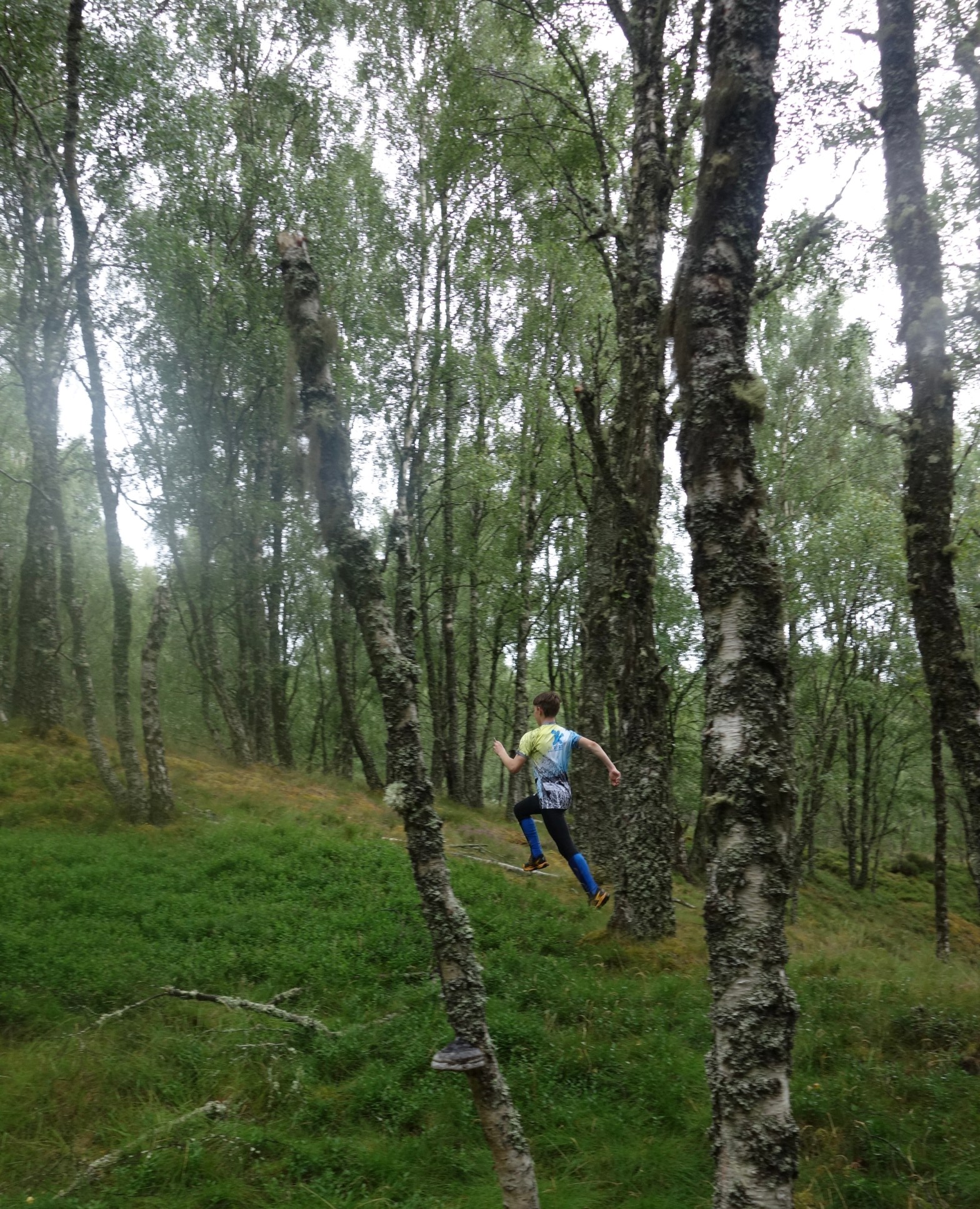
We took the minibus to North Granish for the second day. A trip filled with songs such as Combine Harvester, which turned into a daily tradition, although some coaches weren’t as keen on our loud singing. North Granish was an excellent area with loads of small rolling hills and birch trees, and it almost seemed like a magical landscape. We had a variety of exercises including long and short legs, corridor, handrails, hills, and depressions. The most interesting, though, was the sketch course (see map 1). That morning, we were given a course and set amount of time to draw our own sketch maps that we had to use to do the exercise. For most of us, we were able to complete the course using our maps, and I think most people learned a lot about simplifying through this challenge. We finished off the day with an odd and even relay where two people were running at once, and we had two maps: one with even-numbered controls and the other with odd. You could get one control at a time, and first team back with all controls wins. We finished off day 2 with a wonderful evening meal from wonderful cooks.
Day 3
For day 3 we changed it up a bit and headed to pine forested sand dunes at Roseisle. A really unique type of terrain that many hadn’t run on before. We got a large selection of courses which included some technical green section. The maps had most of the paths removed and some people decided to try navigating without a compass. I found this useful because I’ve improved on picking off detail features and orientating the map from them, which I did in the green.
After lunch we took the long route round to the relay start which didn’t seem necessary although the coaches said it was. After a morning of the forest pretty much to ourselves, the afternoon was filled with people. This relay was a distraction relay, we were all given a number and then the coaches handed over to us, so it was like we had the last leg in the relay by calling out our number. The race was filled with gaffles and coaches running around trying to distract us. They would shout things like “do you know what control you’re going to?” or “I’m lost can you help me” or “it’s that way”. Sometimes what the coaches were saying was correct, but you could never know. One of the controls wasn’t turned on so we had to use the pin punch. And to add to all this, there was a disused railway running down the middle of the area. And not to mention one of the coaches’ siblings turned up and ran around filming us. Luckily for me I knew exactly where I was going so I was overtaking people rather than looking lost.
Overall, I think I improved a lot from that day. My attention to detail, planning and route choice where what stood out to me as improvements. I am particularly proud of one leg on the relay where I took much superior route choice and saved about 20–30 seconds. Then back to the Lagganlia it was for cake, warm food, lots of games of hide and seek, a presentation by the coaches and our beds which were quickly becoming the primary thing we were looking forward to after each day.
Day 4
Wednesday was the day of the sprint orienteering. Firstly, a short drive brought us to Aviemore. This was the sprint qualifiers and the sprint championships. it was a gaffled, timed start, urban event with a little bit of forest. The course was made challenging through the use of artificial barriers. Some people got caught out by these and it cost them time or even their place in the results. Near the end there was a complex butterfly section near the golf course. Unfortunately, this was my worst result of the trip but I learnt from my mistakes as you’ll read in the next section.
After the morning qualifiers, we headed to another outdoors centre called Glenmore Lodge. Everyone participated in the knockouts where we started off with 2 gaffled butterfly loops and then explored the rest of the site. This was my favourite location of the whole week which is partially because I won the knockouts. Our course was only 1.4km long for this but it still had some fairly steep hills especially the road alongside the ski slope. After this, the top 3 boys and top two girls from the two heats moved into quarantine for the final. There were slightly more boys than girls so that’s why there was a difference. For those who don’t know, quarantine is an area where competitors wait; they can’t see the start, you are forbidden to leave, strictly no electronics and there is a toilet there, so you don’t have to leave. We were told that in some events people have had to wait up to 8 hours in quarantine, so people often sleep. Luckily, we only had to wait for about 15 minutes.
For me and another athlete, this was going to be a very interesting race. For the final we had only 800m, 11 controls on a 1:1500 map! It was a very fast paced race and for me and the other athlete our first gaffle was the same. For the second one he completed it slightly faster than me, meaning for controls 9 onwards he had a head start. Between 9 and 10 it was very intense, and I managed to overtake him. Everyone was cheering us on not knowing what was about to happen as I ran into the finish in first place. I had beaten my competitor by seconds or so I thought until I downloaded. Mispunch! On the last control. I thought it was an error until I checked the map and saw that we had both missed control 11 (see map 2). Only the planner knew what had happened. Both me and the other athlete were so focused on the sprint finish that we had not noticed the final control. This meant that we were both disqualified but I still enjoyed it and it was such a fun event to do. And to finish the morning we had a game of volleyball. Then we headed back to Lagganlia to rest before the night.
At around 21:00 we headed to Spey Valley golf course for a selection of night courses, 2 light greens and an orange. Most people took this fairly easy. It was a good idea to include this event because it gave a range of different types of events. The golf course had fairly distinct features, so it was very safe. Because of this we did have quite a late bedtime, but everyone enjoyed it, and it was a good chance to practice night-o.
Day 5
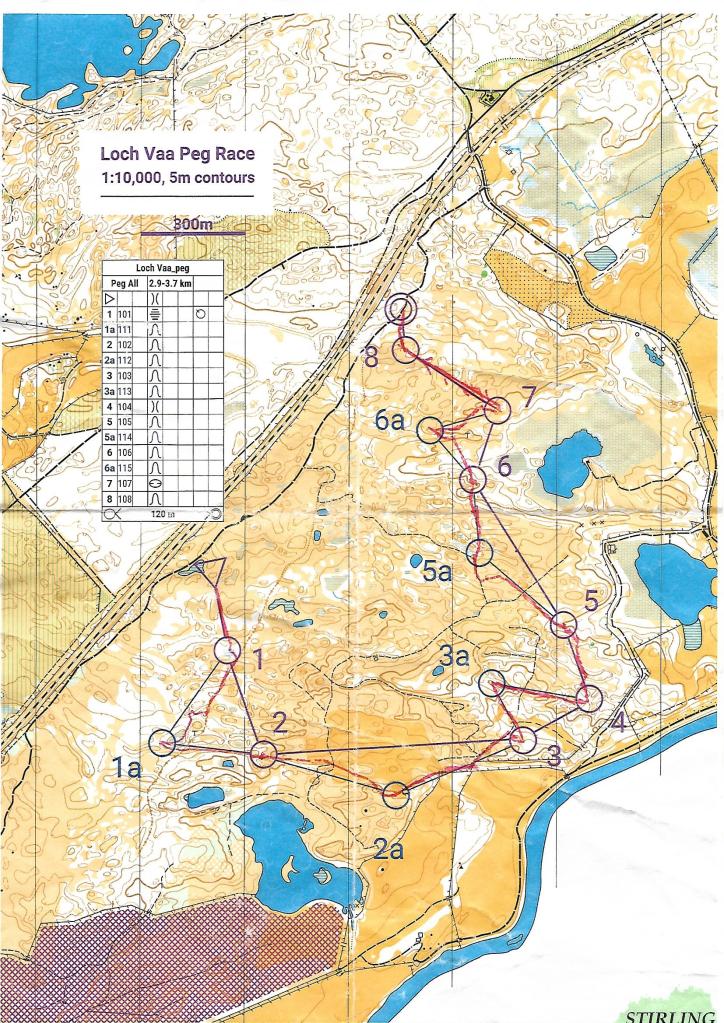
For day 5 a load of tired and grumpy athletes had to go to Loch Vaa. Here we had lots of smaller exercises so back to normal again. Unfortunately, the map was a bit out of date and the whole place was covered in uneven heather which would normally be ok but just after a night-o you can guess it’s not pleasant. We had a few simplification exercises which were good as there were lots of controls. There were also lots of unique forest marsh and contour features and the group learnt lots about planning and execution here. In the afternoon was of course the competition event, a peg race. Eight main controls which all had an unknown number of pegs attached. There was a mass start and if you go to a control and there is a peg, you must take it and then complete the extra control. Soyou do 1 to 1a to 2 rather than 1 to 2. The finish also had pegs on it. The person with the most pegs wins. If 2 people both have the same number of pegs, it’s based on time. No control has enough pegs for everyone. This type of race is designed to make the better people get the pegs at the first control so the not so good people can get ahead. With no pegs it was 2.9km, compared to 3.7km which I did, and got back 2nd by about 0.25 seconds. This meant I won though because I was the only person who got all 6 pegs which is quite rare. I got the last peg on control 3 and there were people right behind me so at first seemed my win was very close, but then Don reminded me I wouldn’t have had to do the extra control at 3. This was probably my second favourite event of the week, and I am particularly proud of some of the legs (see map 3). 1 to 1a there was a large group following an earth wall, but we came off too early. I was first to relocate as I had been able to spot a tower. A skill I learnt earlier in the week. 3a to 4 lots of people were at the wrong end of a depression but using a spur at the correct end I was able to find the control effectively. 5 to 5a I saw people were going a lot slower through the heather and so I cut almost 90 degrees away from the control to reach a path and overtook around 3 people while also having a feature that led me straight in. Finally, 7 to 8 I went pretty much straight on this leg because there were lots of visible features and I am fast at running up hills and it paid off meaning I caught up to the person who was in first place. Little did they know, I had one more peg.
Day 6
By now we were all shattered, but this day was the most important of all. It was the tour championships. Located in Culbin Forest, a much harder version of Roseisle, 5.5km and 20 controls. The true test of skill was what the coaches planned by control 4. There was a big chain led by me and 2 other incredibly good orienteers. We used our skills from the past week to successfully find most controls, on some our bearings were slightly off. It was a really physicallychallenging area, so it was important that we used the skills we learnt effectively. To finish off the race there was a section through dark green full of complex contours. What a pleasant surprise! On this race we had start intervals of 3 minutes, meaning although we all finished together, we were just in reverse order of our starts. The girls had 4.5km with a few less hills to climb with the same technical level. We also had quarantine about 600m from the start which made it feel like a real event. I secured a strong second place but first would have been a touch nicer. We then took the minibus back and almost half the people fell asleep, luckily not the driver. That afternoon we did our final bit of orienteering. A relay on site. Two out of 3 runners out at once, there were 18 controls. You could get one each time. Some of the controls had a bag with an acrylic puzzle piece. They were coloured corresponding to our teams and the first team to complete the puzzle was the winner. Not everyone competed due to minor injuries that the coaches didn’t want to get worse right before the Scottish 6 days. They didn’t do nothing though, as one decided to organise our team from the start flag. With his help and our running combined we were able to win both competitions. However, the finish box wasn’t on the flag because one of the coaches had it and we had to chase him down to get it! To finish off, in the evening we had a big party meal, 3 excellent courses by the cooks. This was followed by the ceilidh, a traditional Scottish country dance. It was a lot of fun and a great way to spend the last evening. But wait… it wasn’t over yet because at 22:30 we all had to sneak out and hide without the coaches finding us. They were supposed to come out at 22:30 but they were enjoying themselves relaxing in their hot tubs. I think we should get them next year. Anyway, this meant that everyone got to their hiding spots fine. Maybe it was our practice playing lots of games of hide and seek throughout the week, the coaches weren’t able to find us. However, one person handed themselves in because of the cold and another thought they had been found when they misheard the coach so got up and were spotted. Everyone else was out there until exactly 23:50 when we headed straight to the coaches’ cabin for a chocolate. What a great way to finish, a nice late night before some of us had a complex train journey home.
I had a fantastic week and very much thank the coaching team, organisers, selectors, cooks, and other helpers for making this possible. I massively improved my orienteering skills and made new friends and am looking forward to my next year of orienteering. Finally, I thank JROS, British Orienteering, Airienteers, and the Jack Bloor fund, for their very generous financial contributions.
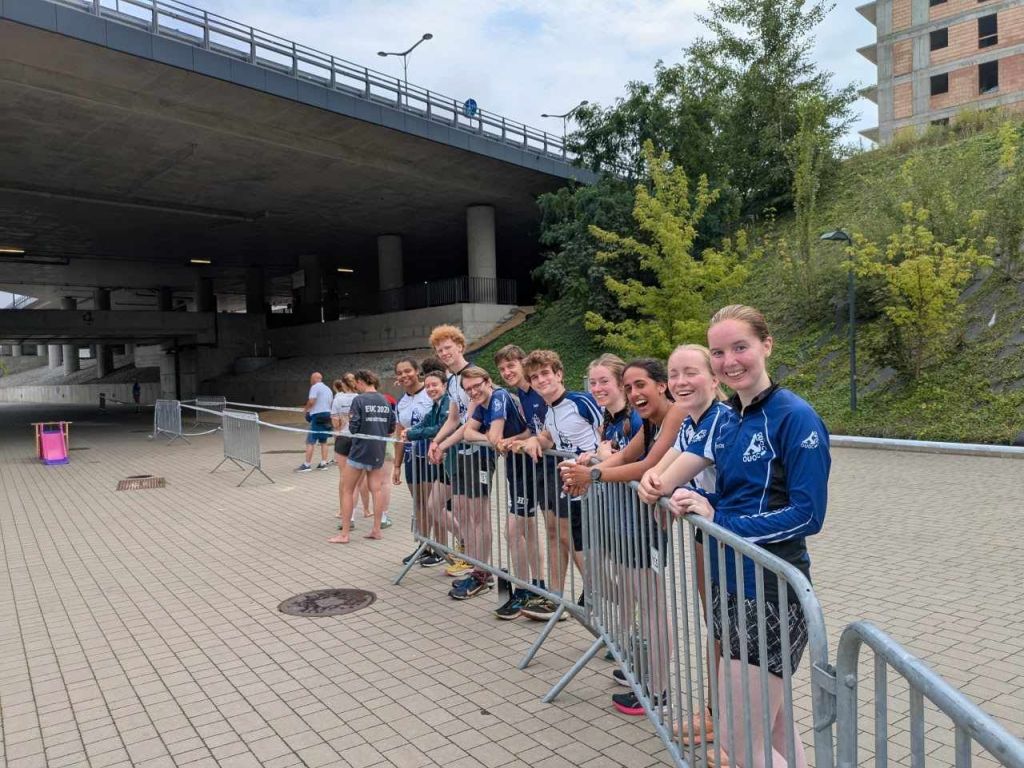
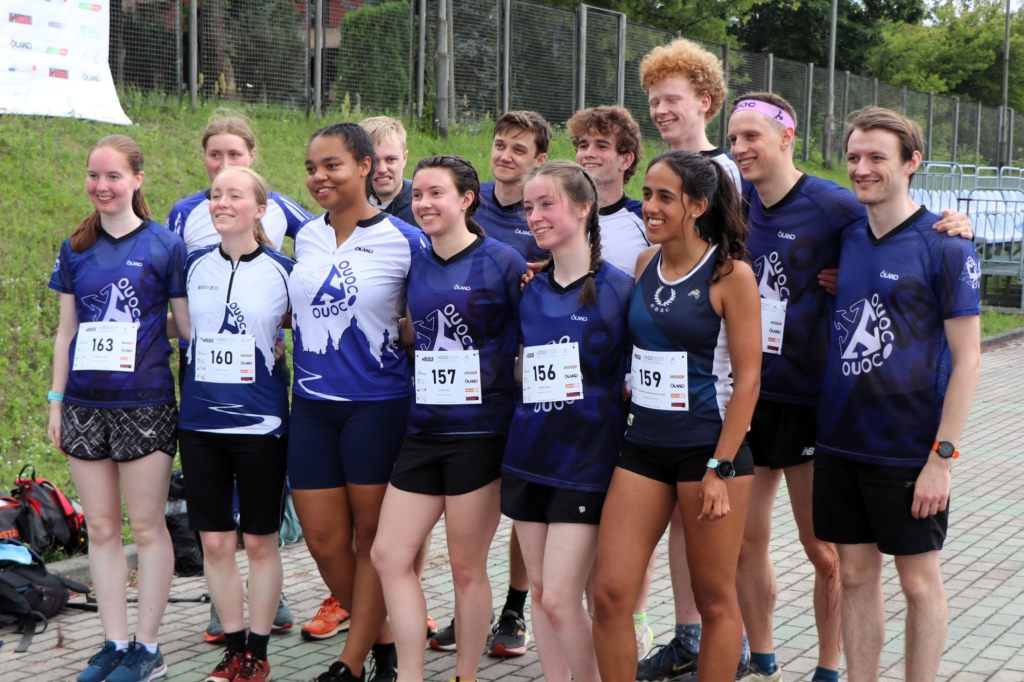
In the last week of July, the European University Orienteering Championships took place Łódź, Poland. For the event, university teams from across Europe gathered for 3 days of racing: The Sprint (urban), The Middle (forest) and Relay (urban).
Having had some time away from navigation and orienteering whilst I focused on my running, it was brilliant to be back competing abroad, amongst many athletes who I had come to know during my junior international years. With a day of model events to get us accustomed to the area and mapping styles, we moved onto the race days, which saw us competing in some hot and humid weather.
The sprint was a fast and extremely enjoyable course with some classic uncrossable details that saw many athletes trip up on the navigational front (myself included!). All the same I was able to make it back with a decent result- the main take away of the day being how fun and exciting the whole race had been.
At this point, dutifully following the recommendations of the vice-president of the orienteering championships, many athletes headed to Łódź Festival to dive deep into the cultural experience of a completely free, 3-day mass music festival taking place at the same time as the competition. The highlight of this was the cross-boarder friendships that saw members of the British, Austrian and Finnish teams all enjoying the occasion together.
Next up was the forest middle-distance race, which was an extremely fast paced race with no room for error. Having made a few mistakes at the start of the course I had lost a fair bit of time, but the second half of the race went smoothly for me, allowing me to earn a top-30 placed finish. By this point athletes from the different universities had made friends and we were able to cheer each other on despite our competitive nature.
My University team had several members whose birthdays would take place during the course of the competition. We therefore ventured out into the town of Łódź to explore the Polish Restaurants, where we could fuel up for the Sprint Relay the following day.
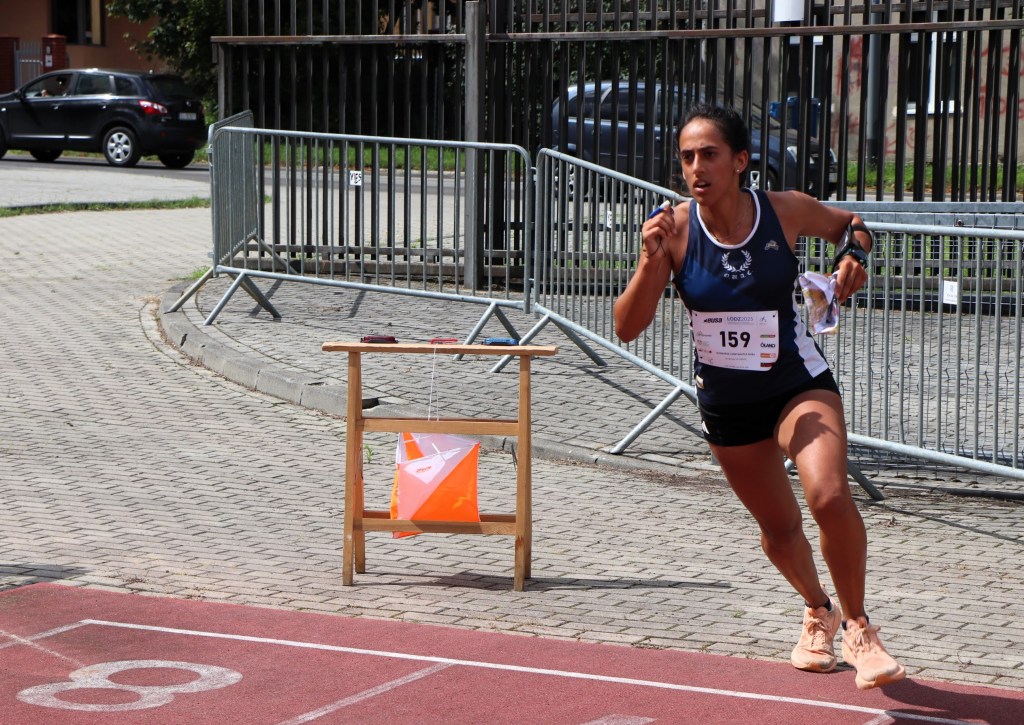
The mixed sprint relay would consist of 4 legs: 1st and 3rd leg run by myself, and 2nd and 4th leg run by my teammate Sam. On each day we had experienced several hours of pre-race quarantine and this occasion was no different apart from that the whole quarantine was taking place in the Łódź city centre train station! With the station activities going on as usual (passengers going about their daily commute) it was a rather surreal experience to be sat with a host of student orienteers, all amongst the regular station users, engaged in endless games of UNO or naughts and crosses, as we waited for the signal that would allow us to head to the start.
After a fast and furious head to head, the relay proved to be our best combined result, finishing in 7th place overall, which we were very pleased with. Being an Oxford team, we naturally compared ourselves to our Cambridge rivals, who had placed 6th, two years previously. Ever the competitor we hope to return again in two years, to improve our result further.
Overall, the European university Championships were a fantastic experience that I cherish dearly.
A huge thank you to the Jack Bloor Fund for helping make this experience possible for me! I have made so many great memories that I will remember for life!





















 Jack Bloor Race & Fund